A Winter Snack Cupboard Made from Ordinary Food
What to keep on hand between meals through the cold months: dried fruit, nuts, cheese, oatcakes, peas and fish, with the three things worth doing first.
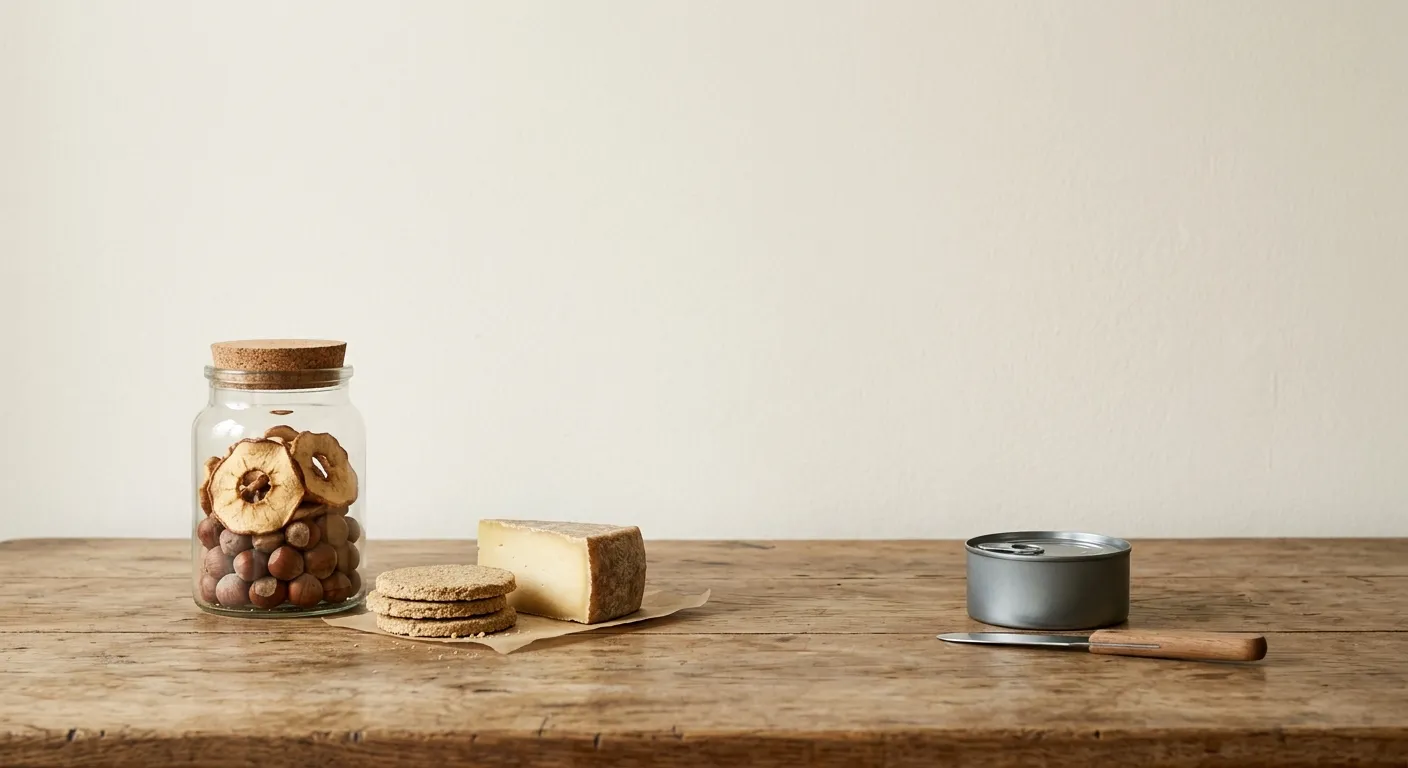
The job of the cupboard
The gap that packaged snacks fill is real. You are away from the cooker, you want something you can hold in one hand, and you want it to taste like food rather than a project. A winter cupboard covers that gap with things you can see the ingredients of.
Dried apples, hazelnuts, a wedge of hard cheese, a tin of oatcakes, a jar of dried peas and a tin of fish will do more for an ordinary week than a drawer of bars. Some of them sit in a cool cupboard. Cooked ones live in the fridge or the freezer. The split matters, and each guide on this site says which is which.
Households in medieval northern Europe stored the same kinds of food, because a hearth and a crock were what they had. Dried apples, nuts, hard cheese and oatcakes are old for that reason. The methods below are the modern ones: a dehydrator or a low oven, a fridge at 4°C (40°F) or below, and jars you can see into.
What to keep, and what it stands in for
Use this as a shopping and cooking list, then open the guide for the food you actually want. Shelf life here is a household guide from extension services and food-safety agencies, not a promise that the last day is still good. If it smells wrong, looks mouldy, or was left warm, throw it out.
| Food | Useful instead of | Where it lives | Guide |
|---|---|---|---|
| Dried apple rings | Fruit sweets and gummies | Cool, dark cupboard, up to about a year at 15°C (60°F) once properly dried | Dry apple rings |
| Quince paste | Fruit leather bars | Fridge, or the freezer | Quince paste |
| Hazelnuts | Coated nut mixes and protein bars | Airtight jar, fridge or freezer | Hazelnuts and chestnuts |
| Chestnuts or chestnut flour | A sweet starchy snack | Fresh chestnuts in the fridge; flour in a tin | Same guide |
| Hard cheese | A processed snack with a long ingredient list | Fridge; a few weeks once cut | Hard cheese and curds |
| Fresh curd cheese | Soft cheese from a tub | Fridge, and eat it this week | Same guide |
| Oatcakes | Granola bars | A tin, about a fortnight if they stay crisp | Oatcakes |
| Rose-hip syrup | A vitamin drink made from syrup and flavouring | Fridge once open | Rose hips |
| Salt cod, tinned fish, smoked mackerel | Meat sticks and jerky snacks | As the packet says; fridge after opening | Fish that keeps |
| Pease pudding | A heavy sandwich filling from a packet | Fridge a few days, or freeze slices | Pease pudding |
| Honey gingerbread | Sweet biscuits | A tin for about a week, or the freezer | Honey gingerbread |
| Wild garlic, frozen as pesto | A winter herb you would otherwise buy | Freezer | Wild garlic |
Stale bread belongs in this list as an ingredient, not as a snack by itself. A thick slice of yesterday's loaf can carry cheese or pease pudding. Dry breadcrumbs are the traditional binder in honey gingerbread. Eating the bread you already have is the whole trick.
Thin wafers of flour and water are just as old, and they are the ancestor of the waffle. They are a pleasant extra. Oatcakes are the one worth baking for the tin, because they carry more of the grain and they keep for the same reason: they are dry.
Three things to do this week
October is apple season in a lot of places, and oats and cheese are in every shop.
- Dry one batch of apples. Two or three large apples fill a dehydrator tray. The method, including why a string over a radiator is a poor plan, is in the apple guide.
- Bake one tray of oatcakes. They are oats, salt, a little fat and hot water. Cool them before they go in the tin.
- Buy a wedge of a cheese you already like, and either hazelnuts or a tin of fish. Eating them this month is the point. Replace the wedge when it gets small.
Quince paste is worth it if you can buy quince. Rose hips and wild garlic depend on a sure identification, so leave them until you have read those guides. Salt cod is a weekend dish, not a pocket snack, until it has been soaked and cooked.
If you only like two of these, store two. Food you will not eat is not a store. That is the same rule as the rest of a home pantry.
How the year turns over
Think of four jobs, not fifteen recipes.
Autumn. Dry apples, cook quince if you have it, buy nuts, roast or freeze chestnuts, put dried peas and salt cod on the shelf.
Winter. Eat from the jars. Bake oatcakes when the tin is empty. Keep hard cheese in the fridge and tinned fish in the cupboard. Make pease pudding when you want a hot meal that becomes tomorrow's cold slice.
Spring. Wild garlic, if you can identify it, becomes pesto in the freezer for the rest of the year.
Any week. Oats, dried peas, nuts in the freezer, hard cheese and tinned fish do not depend on a harvest.
Put newer jars behind older ones, and write the date on the lid. The rotation guide covers the habit. A cupboard works when you cook from it on ordinary Tuesdays.
Limits worth knowing before you start
A few of the old methods are poor advice in a modern kitchen, and this set of pages does not repeat them.
- Dry fruit with heat and moving air, at about 60°C (140°F). Hanging slices in a cool room lets the centre stay damp, which is when mould gets a chance.
- Keep cooked food cold. Pease pudding, fresh curds and opened fish belong in the fridge and get eaten within a few days, or they go in the freezer.
- Buy cured and smoked fish. Drying or smoking fish at home, with whatever salt and heat you have, is a different project with real food-poisoning risks. These pages are about using the finished product.
- Honey is not for infants under one. NHS advice is that honey can contain spores that a baby's gut cannot handle. That includes honey in quince paste and in gingerbread.
- Forage only when you are sure. Horse chestnuts are not sweet chestnuts. Lily-of-the-valley is not wild garlic. If you are guessing, buy the food.
Medieval households also went hungry, lost teeth to coarse food and grit, and lived with infections that antibiotics and clean water deal with now. These pages are not a claim that an old diet was healthier overall. They are a claim that several of the snacks still work, and that a short ingredient list is a practical upgrade on a packet whose main skill is being available at a till.
Winter snack cupboard questions
What snacks can I store for winter without a special kit?
Dried apple rings if you can dry them properly, oatcakes, hazelnuts in an airtight jar, a wedge of hard cheese in the fridge, dried peas, and tinned fish. Quince paste, rose-hip syrup and wild-garlic pesto are worth adding when the ingredient is in season and you have a safe way to keep them.
Which three should I start with?
Dry a tray of apples, bake a tray of oatcakes, and buy a cheese you already eat plus either hazelnuts or a tin of fish. Use them this month and replace what you finish.
Do these replace a normal pantry?
No. They cover the food you eat between meals. Rice, pasta, tins and water are still the base of a household store. The beginner stockpile guide is the place for that.
Were these really medieval foods?
Dried fruit, nuts, hard cheese, oats, dried peas and dried fish were ordinary stored foods in medieval Europe. The instructions on these pages follow current extension-service and food-safety guidance, because a hearth and a crock are not a safe method to copy in detail.
Where this comes from
Drying times and temperatures follow the National Center for Home Food Preservation and university extension guides linked from the apple page. Fridge times for cooked leftovers follow USDA FSIS leftovers guidance. Cheese times follow USDA FSIS answers on keeping cheese in the refrigerator. The infant honey warning follows the NHS. Nutrition figures on the other pages are rounded from USDA FoodData Central; the label on the packet in your hand is the one to follow. Historical lines are context. They are not the recipe.
Related guides
Be prepared!