Salt Cod, Tinned Fish and Smoked Mackerel
Buy the fish already salted, tinned or smoked. Soak salt cod in the fridge, eat tinned fish from the cupboard, and keep smoked fish cold. Home-dried fish is a different project.
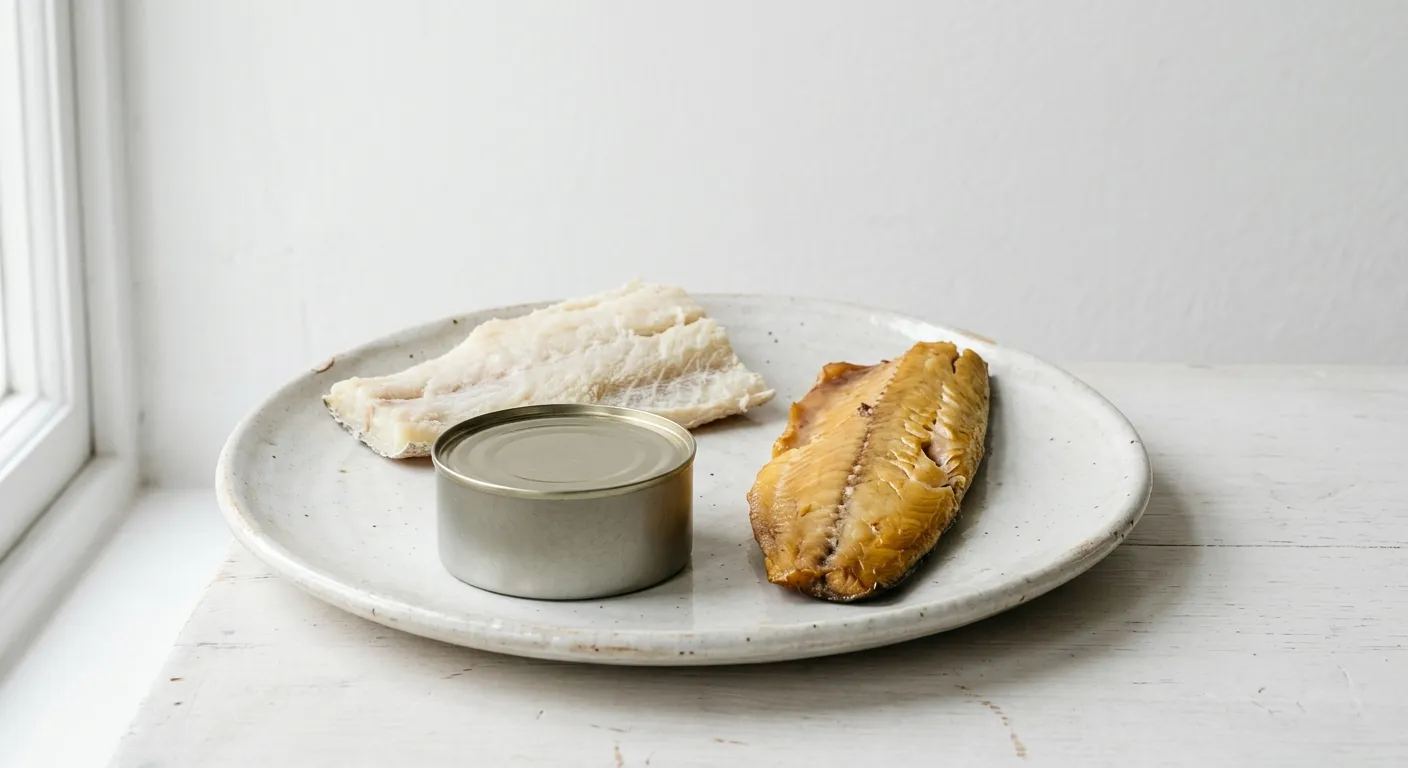
Three products, three habits
Dried and salted fish kept working people fed because it was light, it did not need a cold store, and it was mostly protein once the water was gone. Medieval trade records and sagas describe dried cod moving from Norway toward Britain, and later the Hanseatic ports handled a great deal of it. Christian fast days, when meat was off the table and fish was not, made the trade ordinary rather than exotic.
Two names get mixed up. Stockfish is unsalted fish, traditionally cod, dried in cold air until it is board-hard. Salt cod (bacalao, klippfisk) is salted and dried. Both need soaking and cooking. Neither is a bar you eat from the packet. The food that behaves like a pocket snack is the tin: sardines, mackerel, salmon, mussels. Smoked mackerel is the oily one you buy from a chill counter and eat this week.
This page is about those shop products. Drying or smoking raw fish in a kitchen, with an improvised salt and an improvised fire, can leave parasites alive and can give botulism a chance if the fish is moist and short of oxygen. If you want to cure fish, use a current, tested method from a food-safety authority, not a reconstruction. The USDA FSIS pages on fish and leftovers are the tone to follow: cold, clean, and cooked through.
Salt cod, soaked in the fridge
Buy a piece that smells of clean brine, not of ammonia. Ammonia means it has been badly stored or kept too long. Thick pieces from the loin take longer to soak than thin tail pieces.
- Rinse the loose surface salt.
- Put the fish in a large bowl of cold water in the refrigerator. Warm water on the counter is how the outside starts to spoil while the inside is still too salty.
- Change the water every few hours, or at least morning and night. Many pieces are pleasant after 24 hours. A very thick, very salty piece may want 36 to 48. Taste a flake. It should be seasoned, not punishing.
- Skin it if the skin is tough. Poach it gently in fresh water or milk, just below a simmer, until it flakes. A hard boil turns it into wool.
Use it the day you cook it, or the next day from the fridge. USDA leftovers guidance is three to four days for cooked food, and fish is the leftover to eat first, not last. Flake it into cakes with potato and parsley, stir it into a tomato sauce, or pile it on toast with oil and pepper.
Once it is soaked it is perishable fresh fish. It does not go back on the shelf.
Tinned fish, the actual snack
A tin of sardines or mackerel is the no-prep version of the old dried strip. It sits in a cupboard until you open it. USDA tables for sardines canned in oil, drained, land around 25 grams of protein per 100 grams. The tin in your hand has the number that counts, including whether you are eating the oil.
Open it, eat it on oatcakes or bread, and refrigerate any remainder in a clean box, not in the opened tin. Finish it within two days. Tomato-sauce tins and oil tins behave the same once the seal is broken: they are leftovers.
For a store you might lean on, buy the fish you already like and rotate the tins. A wall of a brand nobody eats is not a protein plan. Ring-pull tins matter if you are also packing a bag for a power cut; a manual opener still belongs in the drawer.
Smoked mackerel, and a word on eel
Hot-smoked mackerel is cooked. Keep it refrigerated, sealed, and eat it by the date. Once opened, two days is plenty. The oily flesh is the point: it is a rich snack in a way a tin of tuna in water is not. Pair it with something sharp, horseradish or pickles, so a little goes further.
Vacuum packs of smoked fish need the fridge the label demands. A pack left in a warm room is not a thing to taste-test. Botulism toxin does not announce itself with a bad smell.
Smoked eel was a fatty fish in medieval England. Domesday Book records fenland fisheries paying rent in eels, and Ely's name is often explained as the eel district. If you want that kind of food now, buy smoked eel from a fishmonger who handles it cold, and eat it this week. A day of smoke over a household fire is not a method this page will write down.
Fish questions
How long do I soak salt cod?
Usually 24 hours in the refrigerator, changing the cold water several times, and up to 48 hours for a thick, very salty piece. Taste a flake. Keep the bowl in the fridge the whole time.
What is the difference between stockfish and salt cod?
Stockfish is air-dried and unsalted. Salt cod is salted and dried. Both are soaked and then cooked. Neither is eaten straight from the dry state as a snack.
How long does an open tin of fish last?
Move leftovers to a box and refrigerate them. Eat them within about two days. An unopened tin follows the date on the can, stored cool and dry.
Can I dry fish at home the old way?
Not from a general description. Uneven salt and slow drying can leave you with unsafe fish, including parasite and botulism risks. Buy commercial salt cod, stockfish or tinned fish, or follow a current tested method from a food-safety authority.
Where this comes from
Leftover and cold-storage practice follows USDA FSIS leftovers guidance. The sardine protein figure is rounded from USDA FoodData Central for sardines, canned in oil, drained; use the label you bought. The warning on home-cured fish is there because Clostridium botulinum and parasites are real hazards in fish that is salted or dried badly; this page therefore stays with commercial products. The medieval trade and the Domesday eel rents are historical context, not a recipe.
Related guides
Be prepared!