Wild Garlic: Pick It in Spring, Freeze It for Later
Ramsons are a spring leaf with a real garlic smell. Identify them properly, including the plants they are not, then freeze a pesto. Garlic in oil does not sit on the counter.
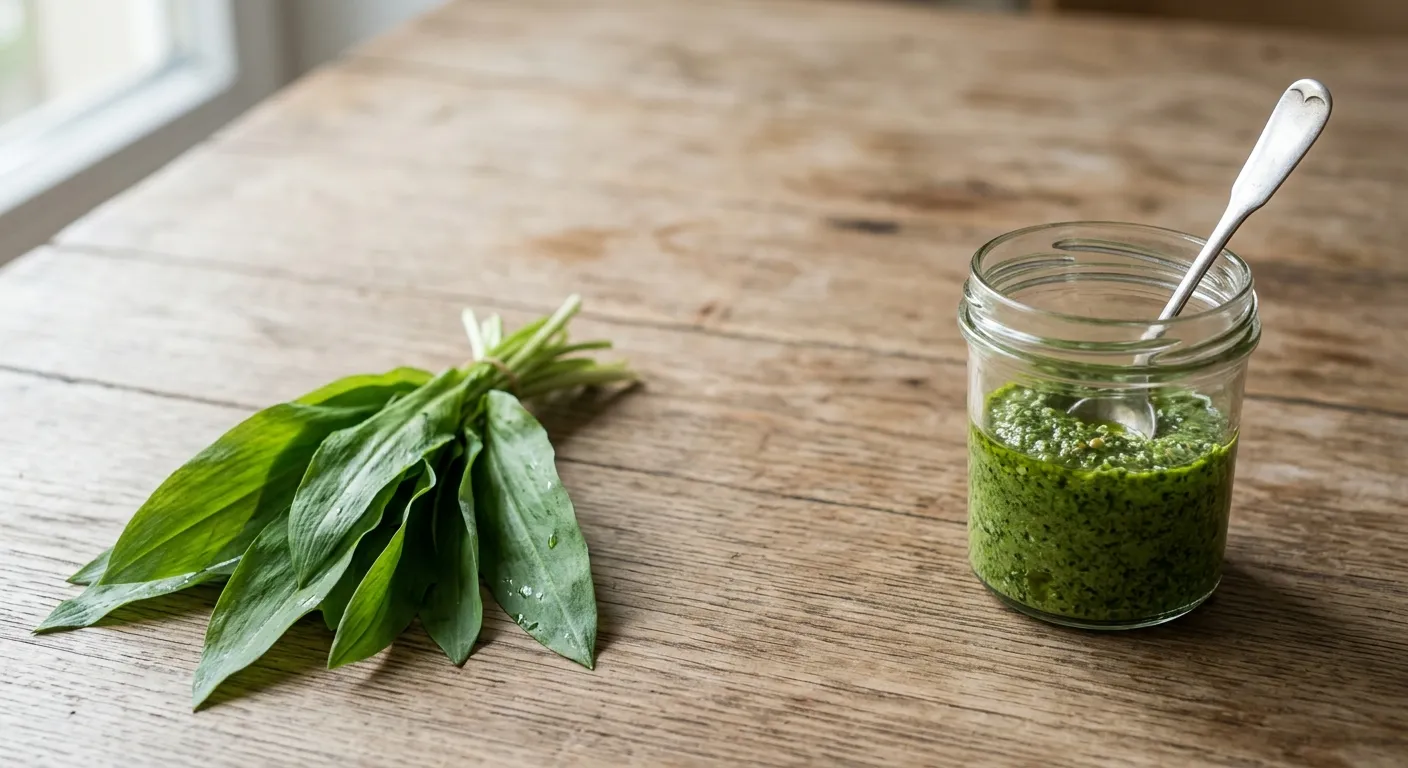
A spring leaf, a winter cube
Wild garlic, also called ramsons, is Allium ursinum. It carpets damp deciduous woods in spring, flowers white, and smells of garlic if you crush a leaf. In Britain the leaves are at their best around April and May. By midsummer the plant has died back to a bulb. The winter use is what you froze in spring.
People have eaten the leaves for a long time. The useful modern version is a labelled box in the freezer, not a handful chewed on a walk unless you are already sure of the plant in front of you.
The sulphur chemistry that makes garlic pungent, including a compound called allicin, has been studied for antimicrobial effects in laboratory conditions. A leaf on a piece of bread is a flavour. It is not a treatment for an infection, and this page will not dress it up as one.
Identify it, or leave it
The Woodland Trust describes ramsons as leaves that grow from the base of the plant, long and oval with smooth edges, and a strong garlic smell. Flowers, when they come, are white and star-shaped, in a rounded cluster on a leafless stalk. The Norwegian poison centre makes the same points and is explicit about the plants people mix up.
Check all of these. One of them is not enough.
- Crush a leaf. It should smell clearly of garlic or onion. Smell the leaf you are about to eat, not the air in a wood that already smells of a carpet of ramsons. A poisonous leaf can sit in the middle of that carpet and borrow the smell of its neighbours.
- Each leaf rises on its own stalk from the base. Lily-of-the-valley usually has two or more leaves from a stem.
- The flowers, if present, are stars, not bells. Lily-of-the-valley has hanging bells and is poisonous. It acts on the heart.
- Autumn crocus (Colchicum autumnale) puts up broad leaves in spring and flowers later. Those leaves do not smell of garlic. They are poisonous.
If you are unsure, do not taste it to check. Spit-testing a maybe-lily is how people end up in poison centres. Buy a bunch of cultivated garlic or a pot of chives and make the same pesto.
Pick a few leaves from each plant rather than stripping a patch, and do not dig the bulbs. The Woodland Trust notes that wild garlic is widespread; it still does not need a carrier bag per person.
Pesto you freeze the same day
Wash the leaves in cold water and dry them. Grit in the pesto is the usual failure.
For one small batch:
- 100 grams wild garlic leaves
- 50 grams nuts or seeds you already eat (hazelnuts, walnuts, or sunflower seeds)
- 80 millilitres olive oil, plus a little more to cover
- A pinch of salt
- A small handful of hard cheese, optional
Blend to a coarse paste. Taste the salt.
Do not leave garlic in oil at room temperature. Garlic, wild or cultivated, in oil can give Clostridium botulinum the conditions it likes: low acid, no air, and warmth. The US Centers for Disease Control and Prevention treats homemade garlic-in-oil as a botulism risk unless it is kept cold and used quickly, or frozen. The practice here:
- Spoon the pesto into an ice-cube tray the same day.
- Freeze it solid, then tip the cubes into a bag, label it with the month, and keep it frozen.
- If you want a jar in the fridge, cover the surface with a thin layer of oil, keep it at 4°C (40°F) or below, and finish it within a few days. When in doubt, freeze it instead.
A cube on hot pasta, on an oatcake, or stirred into beans is the winter use. The garlic smell survives freezing better than the bright green colour does. Olive-green cubes are still fine.
If you missed the season
Cultivated garlic, a bunch of chives, or a bag of spinach and a clove will make a freezer cube in November. The foraging is pleasant. It is not required for the cupboard described in the winter snack guide. Rose hips are the autumn hedgerow job, and they have their own page, including the hairs inside the fruit.
Wild garlic questions
How do I tell wild garlic from lily-of-the-valley?
Wild garlic leaves grow singly from the base and smell of garlic when crushed. Lily-of-the-valley usually has two or more leaves on a stem, does not smell of garlic, and has bell-shaped flowers. If you are not sure, do not eat it. Lily-of-the-valley is poisonous.
Can I store wild garlic in oil on the shelf?
No. Garlic in oil can support botulism if it sits warm. Freeze pesto in cubes, or keep a fridge jar at 4°C (40°F) or below and finish it within a few days.
When is wild garlic in season?
In Britain, the leaves are up in spring and the flowers run from about April to June. The plant dies back in summer. Freeze what you want for the rest of the year.
Does eating wild garlic treat infections?
Laboratory studies have looked at garlic compounds such as allicin. A leaf is a food flavour. Infections need a clinician, not a hedgerow.
Where this comes from
Identification follows the Woodland Trust wild garlic page and the Norwegian Directorate of Health poison-information page on lily-of-the-valley and autumn crocus. The oil warning follows CDC guidance on botulism and homemade garlic in oil: keep it refrigerated and use it quickly, or freeze it. See CDC botulism prevention. Allicin is mentioned only as chemistry that has been studied in the lab, not as a home remedy.
Related guides
Be prepared!