Quince Paste You Can Keep in the Fridge
Quince is harsh when raw. Cooked with sugar until a spoon leaves a trail, it sets into a slice you eat with cheese. The fridge or the freezer is where it lives.
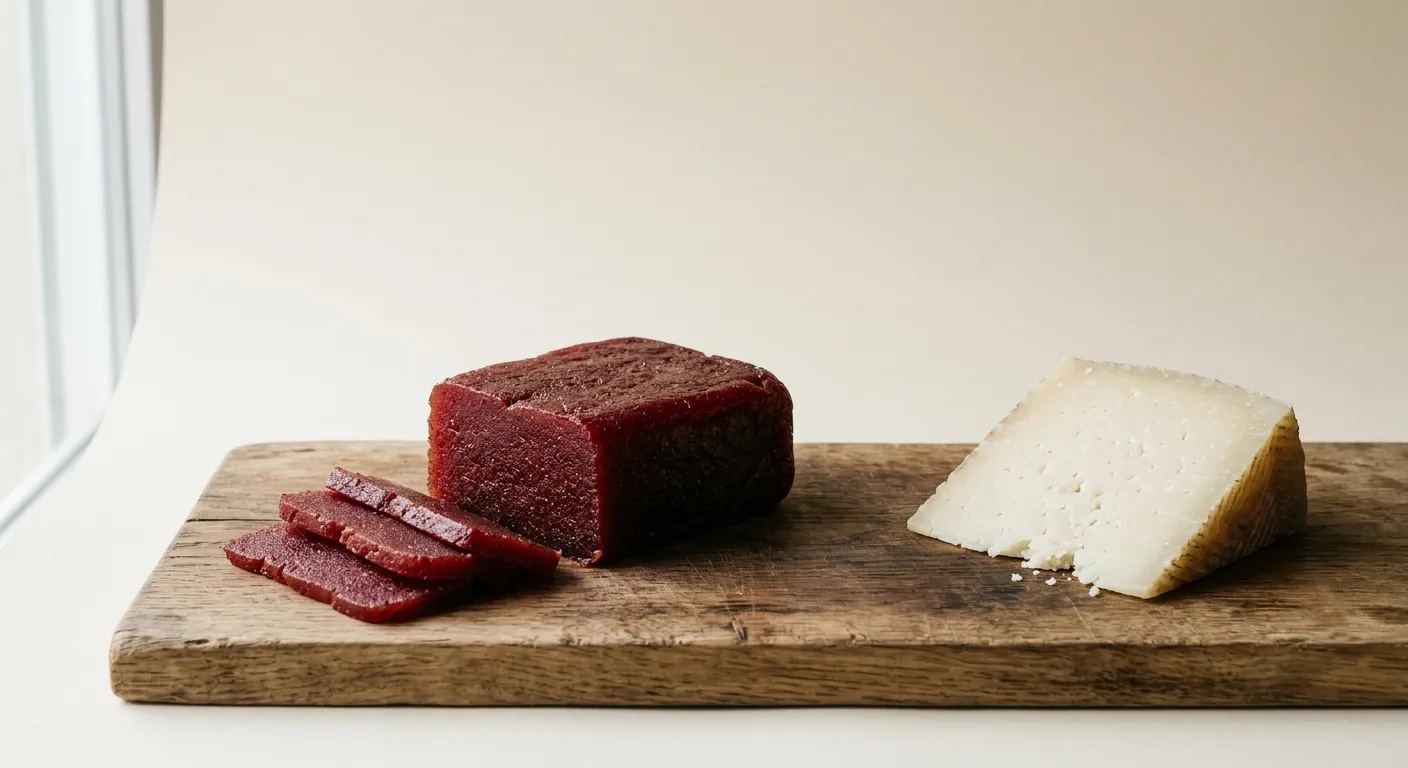
Why quince needs a pan
A raw quince is hard, tannic and unpleasant. Heat and sugar change it. The flesh turns soft, the colour deepens toward pink or red, and the pectin in the fruit sets it so you can slice it. In Spain that paste is membrillo. In France a related sweet is cotignac. Cooked quince with honey is already in the late Roman cookery book attributed to Apicius. The pantry version below uses sugar, because that is what sets a paste you can keep in a fridge with a clear rule.
Honey on its own is a poor place for bacteria: it is acidic and very low in available water. The moment you stir fruit and fruit-water into it, you change both of those. A jar of quince stewed in honey and left on a shelf is not a tested preserve. Extension guidance on quince paste is to refrigerate it, and to throw it out if it moulds.
A paste for one tin
This is a stove method for the fridge or freezer. It is not a canning time. If you want a jar that sits on a shelf unrefrigerated, use a tested canning recipe from the National Center for Home Food Preservation or your local extension service, and follow that recipe's weights and process.
You need about 1 kg of quince, the juice of one lemon, and sugar equal to the weight of the puree you end up with. White or golden caster sugar both work. A heavy pan, a blender or food mill, and a small tin lined with baking paper.
- Wash the quince. Rub off the grey fuzz. Quarter them, cut out the core, and chop. Drop the pieces into water with the lemon juice so they brown more slowly. Peeling is optional. The peel carries pectin and colour; a food mill will catch the toughest bits later.
- Cover the pieces with water in the pan. Simmer until a knife goes through easily, often 30 to 40 minutes. Drain. Keep the cooking water only if you need a spoon of it to blend. You are trying to remove water, not add it back.
- Puree until smooth. Weigh the puree.
- Return it to the pan with the same weight of sugar. Anywhere from three parts sugar to four parts puree, up to equal weights, is the range extension staff describe for a set. Equal weights is the simple rule. Stir over a low heat until the sugar dissolves, then keep cooking. It spatters. Use a long spoon and a sleeve.
- It is ready when it is very thick, has darkened, and a spoon dragged across the bottom of the pan leaves a trail that fills in slowly. That can take an hour. Cooking to about 105°C (220°F), if you have a thermometer you trust in a thick paste, is another sign people use. The trail in the pan matters more than the clock.
- Spread it in the lined tin. Cool it on the counter, then refrigerate until firm, usually overnight.
A mild honey can stand in for up to half of the sugar if you want that flavour. The paste is then off limits for infants under one year. The NHS says honey can contain spores a baby's gut does not handle safely. An all-sugar paste avoids that issue.
Fridge, freezer, and mould
Turn the set paste out, cut it into pieces you will eat in a week, and wrap them. Published kitchen recipes for this kind of paste commonly say it keeps about three months in the fridge, and about a year in the freezer. Treat those as quality guides. The safety rule is simpler: cold storage, a clean wrap, and no mould.
Leave it at room temperature only for the afternoon you are serving it. The extension note on this is direct: even a well-sugared paste can mould on the counter, and a mouldy piece gets thrown away. Do not cut the fuzzy bit off and keep the rest. This is a dense, moist sweet, not a hard cheese.
Quince themselves, unwashed, in a cool dark place, often hold for weeks and sometimes longer. Make the paste when you are ready. A ripe quince smells strongly floral. A rock-hard one with no scent can still be cooked; it may just take longer to soften.
How to eat it
A thin slice with hard cheese is the usual plate. It is also good under a roast, melted into the pan juices at the end, or in small cubes in a plain cake. It is mostly fruit and sugar, so it plays the role of a sweet spread or a fruit leather, in a portion the size of a postage stamp rather than a bar.
Long cooking knocks vitamin C about. Eat this because it tastes like quince and because you know what is in it. For vitamin C through winter, the rose-hip page is the more relevant one, with its own limits.
Quince paste questions
Can I keep quince in honey on the shelf?
Pure honey is hostile to bacteria. Quince cooked into honey is wetter than honey, and that mixture is not a tested room-temperature preserve. Cook a sugar paste and keep it in the fridge or freezer.
How much sugar does quince paste need?
Weigh the puree and add the same weight of sugar. A bit less, down to about three parts sugar to four parts puree, can still set. Too little sugar and it stays soft and is more likely to spoil.
How long does homemade quince paste last?
Keep it refrigerated, wrapped, and plan on about three months for quality, or freeze it for up to about a year. Throw it out at the first sign of mould. Those fridge times are kitchen guidance, not a laboratory shelf-life test.
Is quince paste suitable for babies?
A version made with honey is not, for infants under one year. A sugar paste is still a concentrated sweet, so it is a food for people already eating family meals, not a baby food.
Where this comes from
The cooking signs (a thick paste, a trail in the pan, acid from lemon, enough sugar to set, and fridge storage rather than the counter) match the public answer from Ask Extension on quince paste. Fridge-and-freezer practice is the common published method for membrillo; this page does not give a canning process. The infant honey rule is from the NHS. The Roman and later European names are historical context for a fruit people have cooked for a long time.
Related guides
Be prepared!