Hard Cheese and Fresh Curds
A wedge of cheddar or Parmesan keeps for weeks in the fridge once you have cut it. Fresh cheese made with vinegar is a different food, and it needs eating this week.
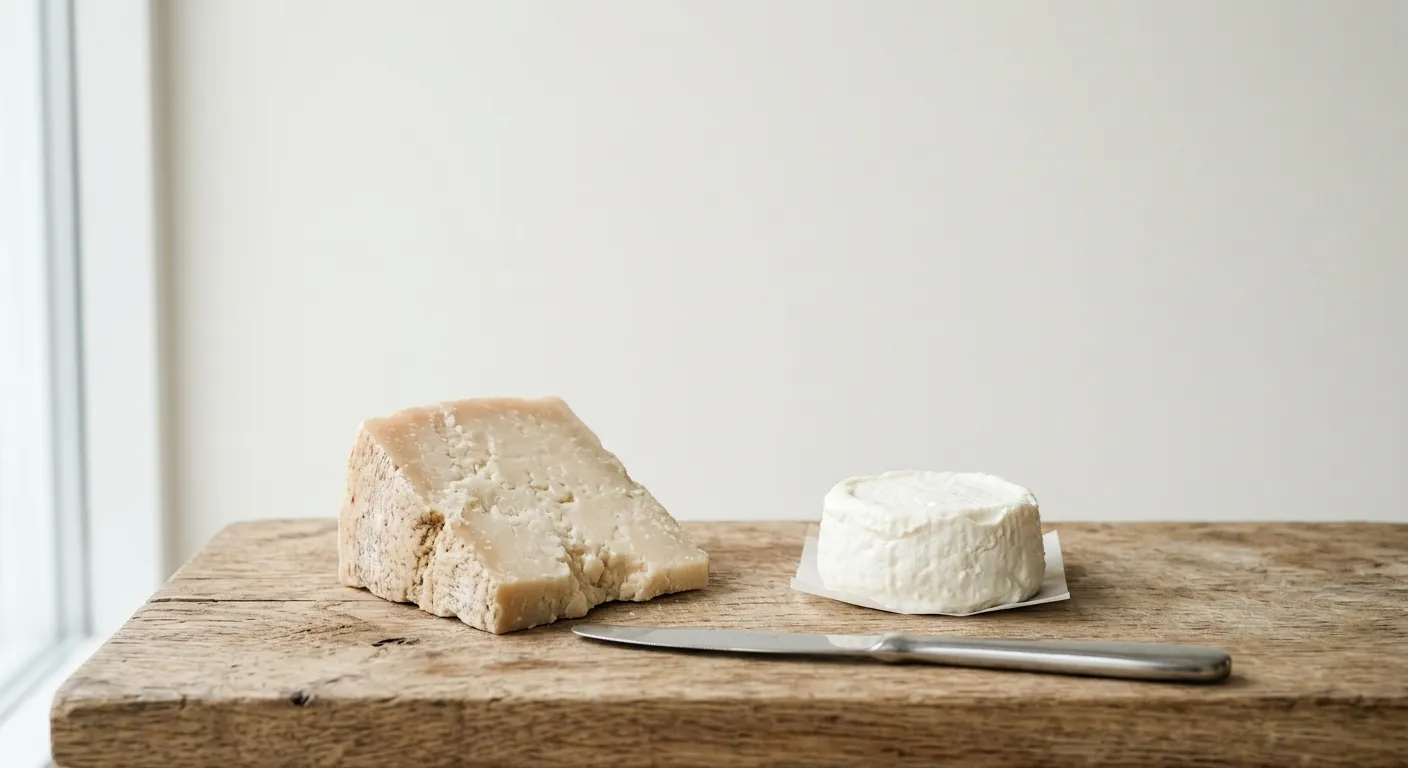
Two cheeses, two clocks
Hard cheese is milk with a lot of the water and the lactose taken out, salted, and aged. That is why a wedge is dense, why it travels better than milk, and why it still belongs in the fridge in a modern house. Fresh curds are milk you have just clotted with acid and drained. They are a soft cheese. They last days, not months.
Medieval dairies and monasteries got good at the aged kind, and cheeses in the Parmesan family were already a named product in northern Italy in the later Middle Ages. The storage times below are the current USDA ones, which assume a refrigerator at 4°C (40°F) or below.
A 28 gram piece of cheddar, about an ounce, has about 7 grams of protein and about 200 milligrams of calcium in USDA tables. Parmesan is saltier and, weight for weight, higher in both. The label on the wedge you bought is the figure to trust. An ounce is a snack. The rest of the wedge goes back in the fridge.
Hard cheese in the fridge
USDA Food Safety and Inspection Service groups cheddar, Swiss and Parmesan together as hard cheeses. Unopened, about six months in the refrigerator. After you open the pack, about three to four weeks. They can also be frozen for about six months; the texture gets more crumbly, which is fine for cooking and a bit annoying on a biscuit.
FSIS also says hard cheeses are not in the same safety category as soft cheeses, and that they last longer if you do keep them cold. For a household, cold is the practice. A warm kitchen dries the cut face, invites mould, and shortens the weeks you were counting on.
Wrap the cut face. Cheese paper or a loose layer of paper inside a box works better than a tight film that traps moisture against the paste, but a clean wrap you will actually use is better than a special product you do not have. Keep the wedge away from raw meat at the bottom of the fridge.
Mould on hard cheese. USDA's mould guidance allows you to cut it off a hard cheese: take at least 2.5 centimetres (1 inch) around and below the spot, keep the knife out of the mould, and rewrap. Soft cheese, crumbled cheese, and anything where the mould is through the piece goes in the bin. The same page says mouldy soft cheese is not a trimming job, because the threads you cannot see may run through it.
If the cheese smells of ammonia, tastes harsh, or the pack was warm for hours, do not negotiate with it.
Fresh curds, the same day
This is the cheese people make when they have milk and an acid, and it is the one Homer has Polyphemus make in the Odyssey, with milk and a strainer. The modern batch lives in the fridge and gets eaten within about a week. USDA puts soft cheeses such as cottage cheese and ricotta at about a week in the refrigerator. Treat this as that kind of cheese.
For about 1 litre (1 quart) of whole milk:
- Pour the milk into a clean pan. Heat it until it is steaming and just short of a boil, around 85–90°C (185–195°F). Stir so it does not catch.
- Take it off the heat. Stir in 2 tablespoons of distilled white vinegar, or lemon juice. The milk should separate into white curds and a yellow whey within a minute or two. If it stays milky, add another teaspoon of acid and wait.
- Line a sieve with a clean muslin or a thin tea towel. Pour the pot in. Let the whey drain. For a spreadable cheese, 15 to 30 minutes is enough. For a sliceable round, twist the cloth, set a plate and a tin on it, and leave it an hour.
- Salt it to taste. Unwrap, put it in a clean box, and refrigerate.
Whole milk gives a softer, richer curd. Skimmed milk gives a sulky handful. The whey is useful in bread dough or a soup if you will use it the same day; otherwise it is wastewater, not a second project.
Eat the cheese on oatcakes, with fruit, or in a salad. It does not sit in a coat pocket on a warm day. If you want portable protein for a walk, cut hard cheese, or take nuts, or take a tin of fish from the fish guide.
What to buy if you will not make any
A wedge of a cheese the household already eats beats a special ageing project. Cheddar, Gruyere, Manchego, a block of Parmesan: any of those fits the three-to-four-week window once opened, if the fridge is cold and you are using it.
Pre-grated Parmesan is drier and the USDA timing for shredded hard cheese is shorter, about a month after opening. It is convenient and it is easy to forget at the back. Write the open date on the tub.
Cheese questions
How long does hard cheese last once opened?
About three to four weeks in a refrigerator at 4°C (40°F) or below, for cheddar, Swiss and block Parmesan, according to USDA FSIS. Unopened, about six months. Freeze it if you will not finish it.
Can I cut mould off cheese?
On hard cheese, yes: cut at least 2.5 centimetres (1 inch) around and under the mould, then rewrap. On soft, shredded or crumbled cheese, throw it away.
How long does homemade vinegar cheese last?
Treat it as a soft cheese. Refrigerate it straight away and eat it within about a week. It is not a shelf-stable snack.
Is a protein bar and a piece of cheese the same thing?
They can carry a similar amount of protein in a similar weight. Cheese is milk, salt and time. A bar is whatever the label lists. Pick the one you will eat, and read that label for the numbers.
Where this comes from
Storage times are from USDA FSIS: how long to keep cheese in the refrigerator and whether all cheese must be refrigerated. Mould rules are from USDA FSIS, molds on food. Protein and calcium figures are rounded from USDA FoodData Central for cheddar. The vinegar method is a standard acid-set curd. Salt and drain to your taste, then keep it cold.
Related guides
Be prepared!