Honey Gingerbread That Keeps in a Tin
A dense slab of flour, honey, butter and spice, baked until it is dry enough to slice. About a week in a cool tin, or longer in the freezer. Not for infants.
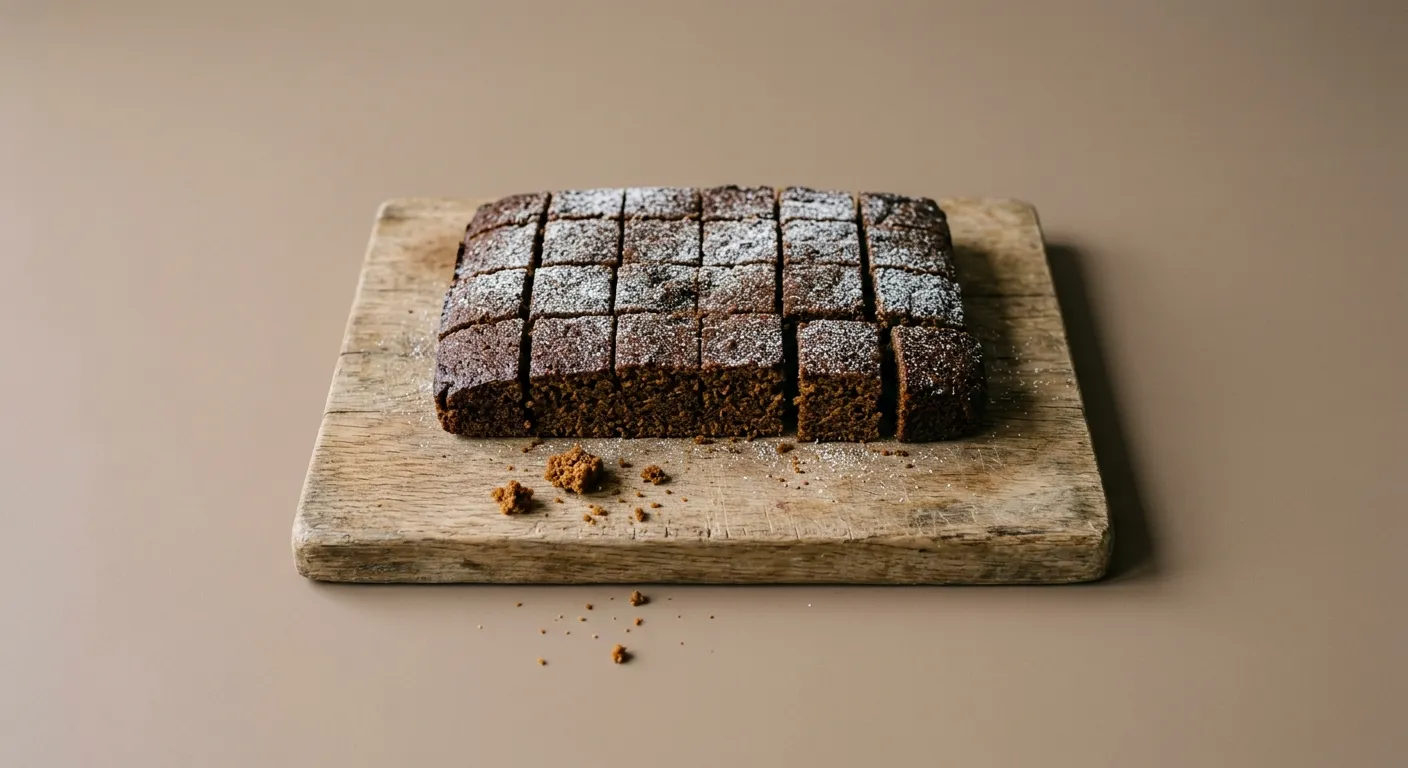
A slab, not a biscuit with icing
The gingerbread at a fairground stall, soft and covered in icing, is a modern cake. The older version across England and the continent was denser: breadcrumbs or flour, honey, and warming spice, pressed or baked into something you could cut and carry. Gingerbread sold at fairs for centuries for that reason. It was sweet, it travelled, and a small piece went a long way.
Honey still does useful work in a dough. It keeps a crumb moist. It does not make a wet cake immortal, and once it is mixed with flour and butter it is no longer the low-water food that pure honey is. Bake this dry, keep it covered and cool, and freeze what you will not eat in the week.
Honey is off the menu for infants under one year. The NHS warns that honey can contain spores a baby's gut cannot safely handle. That includes a crumb of this cake.
The slab
This is a stiff dough, closer to a thick biscuit than to a sponge. No egg. It slices.
- 250 grams plain flour
- 100 grams honey
- 60 grams butter
- 1 teaspoon ground ginger
- 1/4 teaspoon ground black pepper
- 1/2 teaspoon bicarbonate of soda
- 1 tablespoon milk, only if the dough will not come together
Heat the oven to 170°C (340°F). Warm the honey and butter together until the butter melts. Do not boil them. Stir in the ginger and pepper. Mix the bicarbonate into the flour, then stir the flour into the honey mixture until you have a dough that holds. A dry crumbly dough can take the spoon of milk. A sticky dough wants a little more flour.
Press it into a small tin lined with baking paper, about 20 centimetres square, so the slab is roughly 1.5 centimetres thick. Bake 20 to 30 minutes. It is done when the top is firm, the edges have coloured, and a skewer into the centre comes out clean rather than wet. If it still looks glossy and damp in the middle, give it more time. Dry is what you are aiming at.
Cool it in the tin for ten minutes, then on a rack until it is completely cold. Warm gingerbread in a tin sweats, and sweaty gingerbread moulds.
The medieval binder was often dry breadcrumbs rather than fresh flour. If you have stale bread, dry it in a low oven, blitz it, and replace up to half the flour with that crumb. The result is closer to the old slab and a shade more fragile. Flour is the reliable weeknight version.
Tin and freezer
Cut the cold slab into small squares. A piece the size of a matchbox is a snack with a lot of honey in it. The rest is tomorrow.
An airtight tin in a cool cupboard: about a week if the cake was baked dry and the weather is cool. In a warm house, four or five days, then the freezer. Wrap squares and freeze them. They thaw on the counter in half an hour, or ride along frozen in a lunch bag and arrive ready.
Any mould, any smell of beer or must, and the tin is finished. Honey does not let you ignore that.
Pepper in the dough is the old seasoning, and it makes the cake taste less like a jar of syrup. Leave it out if you dislike it. Ginger is the one to keep.
Where it sits next to other sweets
Dried apple rings are the fruit sweet with no added sugar beyond the apple. Quince paste is the fruit-and-sugar block in the fridge. This gingerbread is the baked one, useful when you want something that feels like a treat and still has a short ingredient list.
A shop energy bar and a square of this are both sweet and portable. The difference you can check is the label. If you would rather not bake, buy a gingerbread whose ingredients you recognise, and keep it in the packet until you open it. Then the same rule: cool, covered, and gone within the week.
Gingerbread questions
How long does homemade honey gingerbread keep?
About a week in an airtight tin if it was baked until dry, cooled completely, and the tin stays cool. Freeze squares for longer. Mould or a fermented smell means throw it out.
Can babies have honey gingerbread?
No. Honey is not for infants under one year, including honey baked into a cake.
Can I use breadcrumbs instead of flour?
Yes, for up to half the flour. Dry the bread first and grind it fine. The slab will be more fragile and tastes closer to the older fairground gingerbread.
Does the honey preserve it on its own?
Pure honey is a poor home for bacteria. Mixed into a dough with butter and flour, it is just a sweetener that keeps the crumb soft. Dry baking, a cool tin, and the freezer are what keep this cake.
Where this comes from
The infant honey rule is from the NHS. The recipe is a household slab: flour, honey, butter, ginger, a little pepper, baked dry. Storage follows ordinary practice for a low-moisture bake, with the freezer as the longer option. The breadcrumb-and-honey history is context for why the cake is dense and sliceable. It is not a studied shelf-life trial.
Related guides
Be prepared!