Oatcakes to Keep in a Tin
Oats, salt, a spoon of fat and hot water, pressed thin and baked until dry. Cool them before they go in the tin, and they are a snack you can carry.
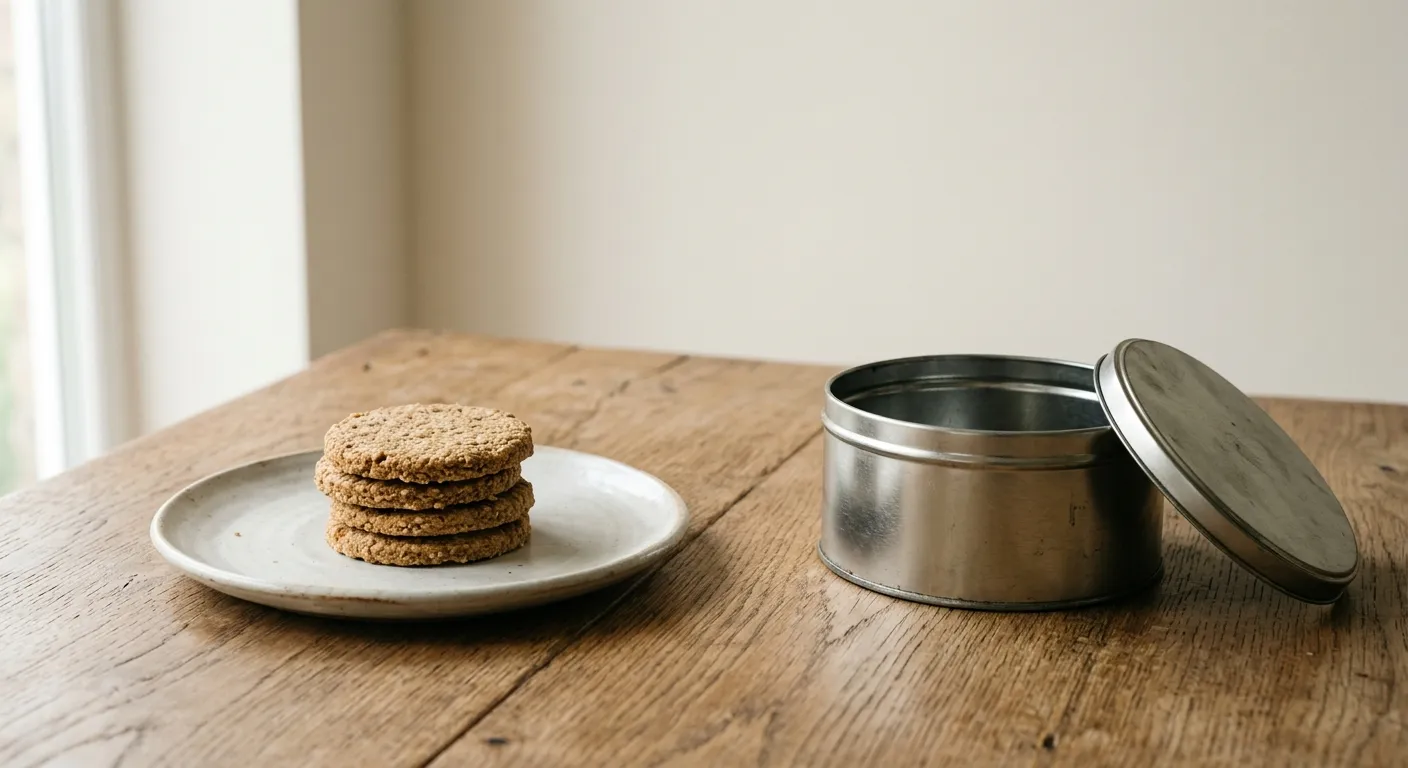
What an oatcake is for
An oatcake is a dry biscuit. It survives a coat pocket better than bread, it is made from a grain that stores well, and the ingredient list can stay at four lines. The 14th-century chronicler Jean Froissart wrote that Scottish soldiers on campaign carried oatmeal and cooked it on a metal plate. The modern version is the same idea baked in an oven so you have a tin ready, rather than a pot to light at the roadside.
Dry rolled oats are about 13 grams of protein per 100 grams in USDA tables, plus a useful amount of a soluble fibre called beta-glucan. In the EU, a cholesterol claim for oat beta-glucan is tied to about 3 grams of that fibre in a day, which is a bowl of porridge, not a single biscuit. One oatcake is a snack. It is not a treatment.
Shop oatcakes are a fair substitute when the ingredient list is short. Make them when you want a tin that did not come with a wrapper of syrup.
One tray
This amount fills a baking sheet with cakes about 8 centimetres across.
- 200 grams rolled oats (about 2 cups)
- 1/2 teaspoon salt
- 30 grams butter or 2 tablespoons of olive oil or dripping
- About 120 millilitres hot water, added gradually
Heat the oven to 180°C (350°F). Melt the fat. Stir it and the salt into the oats. Pour in hot water a splash at a time until the oats hold together when you squeeze a handful. Too wet and they steam rather than dry. Too dry and they crack and fall apart. The dough should feel like damp sand that clumps.
Roll or press the dough on a floured board, or straight on baking paper, to about 5 millimetres. Cut rounds. Lay them on a tray so they are not piled. Bake 20 to 25 minutes, until the edges are dry and the centres are no longer soft. Thin cakes finish sooner. If the middle still bends like fresh bread, give them a few more minutes.
Turn the oven off and leave the door ajar for ten minutes if you want them drier still. Crisp is what keeps.
The tin, and the freezer
Cool the cakes on a rack until they are room temperature all the way through. Packing them warm makes condensation, and condensation makes a soft cake that moulds.
An airtight tin in a cool cupboard is the place. Eat them within about a fortnight if they stay crisp and the weather is cool. In a warm kitchen, move the tin somewhere cooler or freeze what you will not eat this week. Frozen oatcakes thaw in a few minutes, or go straight into a toaster.
If a cake smells musty, feels bendy, or shows any mould, the tin gets emptied. Dry biscuits are not a food you trim.
A month-long claim only holds if the cakes were baked very dry and the tin stayed cool and shut. This page has not run a lab test on a batch. The practical test is the one in your hand: crisp and clean-smelling, or bin.
What to put on them
Cheese, peanut butter, a scrape of quince paste, a few dried apple rings beside them. Butter and salt is enough. They are also the starch in a packed lunch when bread has run out.
Honey on a warm oatcake is pleasant, and it is still honey: not for infants under one year, following NHS advice.
Oatcake questions
What are oatcakes made of?
Rolled oats, salt, a little butter or oil, and enough hot water to bind the dough. That is the whole tin.
How long do homemade oatcakes keep?
About a fortnight in an airtight tin if they were baked dry, cooled fully, and the tin stays cool. Freeze the rest. Throw them out if they soften, smell off, or show mould.
Can I make them without butter?
Yes. Use a neutral oil or omit the fat and add a spoon more water. Fat keeps them tender. Fat-free cakes are drier and more brittle, which is fine for a tin.
Do oatcakes lower cholesterol?
Oats contain beta-glucan, and EU regulators have accepted a cholesterol claim at about 3 grams of oat beta-glucan a day. A single oatcake is well short of that. They are a snack, not a medicine.
Where this comes from
The oat protein figure is rounded from USDA FoodData Central for dry rolled oats. The beta-glucan claim threshold is the European Food Safety Authority's conclusion on oat beta-glucan and blood cholesterol, about 3 grams a day. Froissart's note on Scottish campaign food is historical context from his chronicles, not a baking instruction. Storage is household practice for a dry biscuit: cool completely, keep air and moisture out, and discard anything soft or mouldy.
Related guides
Be prepared!