Rose Hips: Drying Them and Making a Syrup
Rose hips are a wild fruit high in vitamin C. Strain out the irritating hairs, cook a syrup if you want a bottle, and keep it in the fridge once it is open.
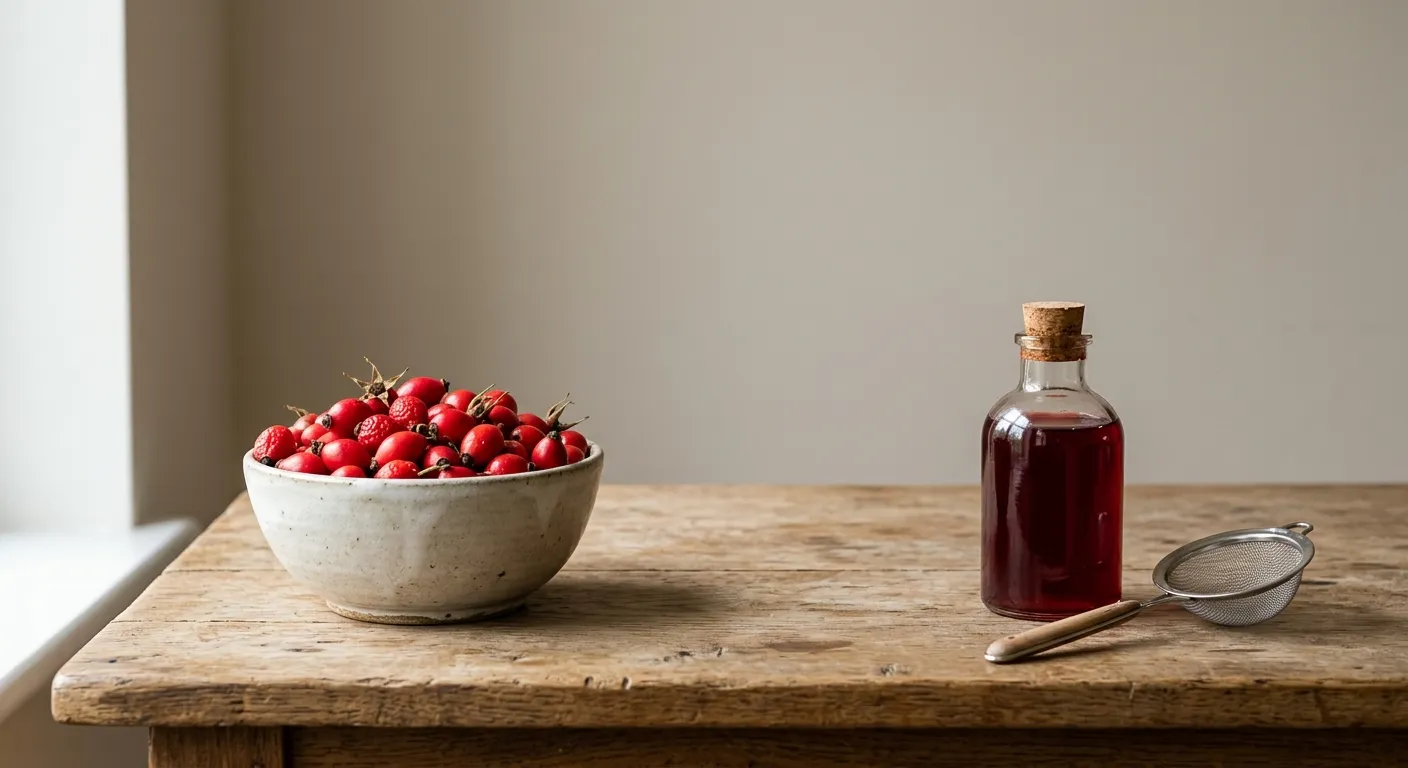
What you are picking
Rose hips are the fruit left after a wild rose flowers. Dog rose, Rosa canina, is the common hedgerow one in Britain and much of Europe. Pick them when they are red and slightly soft, after the first frosts if you can wait, and leave plenty on the bush for birds. Skip any near a busy road, sprayed field edge, or dog-walking path you would not pick blackberries from.
Medieval households gathered them. The clearest public demonstration of why is much later: in the Second World War the British Ministry of Food organised collection of wild rose hips for syrup, because imported citrus was scarce. That is history, and it is a reason the fruit is interesting. It is not a medical claim. A syrup is a food. Illness goes to a doctor.
One USDA analysis, filed as rose hips, wild (Northern Plains Indians), measured 426 milligrams of vitamin C per 100 grams. A raw orange is about 53 milligrams per 100 grams in the same database, so that particular sample was roughly eight times an orange by weight. Other published measurements of dog-rose hips scatter widely with species, season and whether the hips were fresh or dried. Treat any single multiple as a range. Cooking destroys a good share of vitamin C. Dried hips used as a tea, steeped rather than boiled for an hour, keep more of it than a long-cooked syrup. Neither one is a measured supplement.
The hairs are the part to respect
Inside each hip is a mass of seeds wrapped in fine hairs. Those hairs irritate the mouth and the gut. People who eat hips raw, casually, in quantity, find this out. The kitchen rule is: get the hairs out, or strain them out so thoroughly that none remain in the liquid.
For tea, dry the hips first (below), then split them, scrape out the seeds and hairs, and use the red shell. A food mill or a very fine cloth does the same job after cooking, which is the syrup method.
Drying
Rinse the hips, cut off the black ends, and pat them dry. Spread them on a dehydrator tray. Dry at about 60°C (140°F), the same fruit temperature as apples, until they are hard and no longer rubbery. Split a couple: the flesh should be dry, not leathery-damp.
If you are drying them to use as tea, it is easier to halve them and scrape out the seeds and hairs before they go on the tray. Wear a sieve between you and the hairs; they float.
Condition them the way you condition dried apples: a loose jar for a week, shaken daily, back to the dryer if moisture shows. Then pack small jars, cool and dark. A few months is a sensible quality window. They are a fruit with more water to start with than an apple slice, and they pick up moisture again if the jar is sloppy.
A syrup you keep cold
This is a fridge bottle, not a canned preserve. There is no water-bath time on this page.
- Roughly chop 500 grams of hips. A food processor is fine.
- Put them in a pan with 1 litre of water. Bring to a boil, then simmer about 15 minutes.
- Pour into a jelly bag or a double layer of muslin. Let it drip. Do not squeeze if you want a clear syrup; squeezing pushes hairs through. When it has dripped, strain the liquid again through clean muslin. If you can see hairs, strain again. This is the step that matters.
- Measure the juice. For each 500 millilitres, add about 325 grams of sugar.
- Heat gently until the sugar dissolves, then boil for about 3 minutes. Skim.
- Pour into bottles you have washed hot and dried in a low oven. Cap them. Cool. Label with the date.
Keep the bottles in the fridge. Use an open bottle within a few weeks, and sooner if it smells of wine or shows mould. A common kitchen window for an unopened fridge bottle made this way is about four months. That is a quality guide. Ferment, mould, or a bulging cap means the bottle goes down the sink.
A spoon in hot water, or on porridge or yoghurt, is the use. It is a sweet drink base. The sugar is doing a lot of the preserving, and it is still sugar.
Rose hip questions
Are rose hips high in vitamin C?
Fresh hips can be. One USDA sample of wild rose hips measured 426 milligrams per 100 grams, against about 53 milligrams in 100 grams of raw orange. The number moves with the hips, and cooking into syrup lowers it. Use the syrup as a food, not as a dose.
Can you eat rose hips raw?
The red flesh is edible. The seeds are wrapped in hairs that irritate the mouth and gut, so scrape them out or strain them out of any liquid. A casual handful of whole hips is a poor idea.
How long does homemade rose hip syrup last?
Refrigerate it. Plan on about four months unopened as a quality guide, and a few weeks once open. Throw it out if it ferments, moulds, or the cap bulges. This page does not give a canning process for shelf storage.
Did people rely on rose hips in wartime?
In Britain, yes. The Ministry of Food collected wild rose hips for vitamin C syrup when citrus imports were cut during the Second World War. Households had been eating the fruit long before that.
Where this comes from
The vitamin C figures are from USDA FoodData Central: rose hips, wild (Northern Plains Indians), and raw oranges. Drying temperature matches the fruit guidance used on the apple page, from the National Center for Home Food Preservation and university extension services. The double-strain and the sugar ratio (about 325 grams per 500 millilitres of juice) are the usual household syrup method, kept in the fridge because this page is not a tested canning recipe. The wartime collection is a matter of public record from the Ministry of Food. Pick only hips you have identified as roses, and leave sprayed and roadside bushes alone.
Related guides
Be prepared!