How to Rotate Stored Food (First In, First Out)
Rotation is what stops a stockpile turning into a pile of out-of-date tins. Here is a simple way to do it at home, with dates, labels and a routine you can keep up.
What first in, first out means in a kitchen
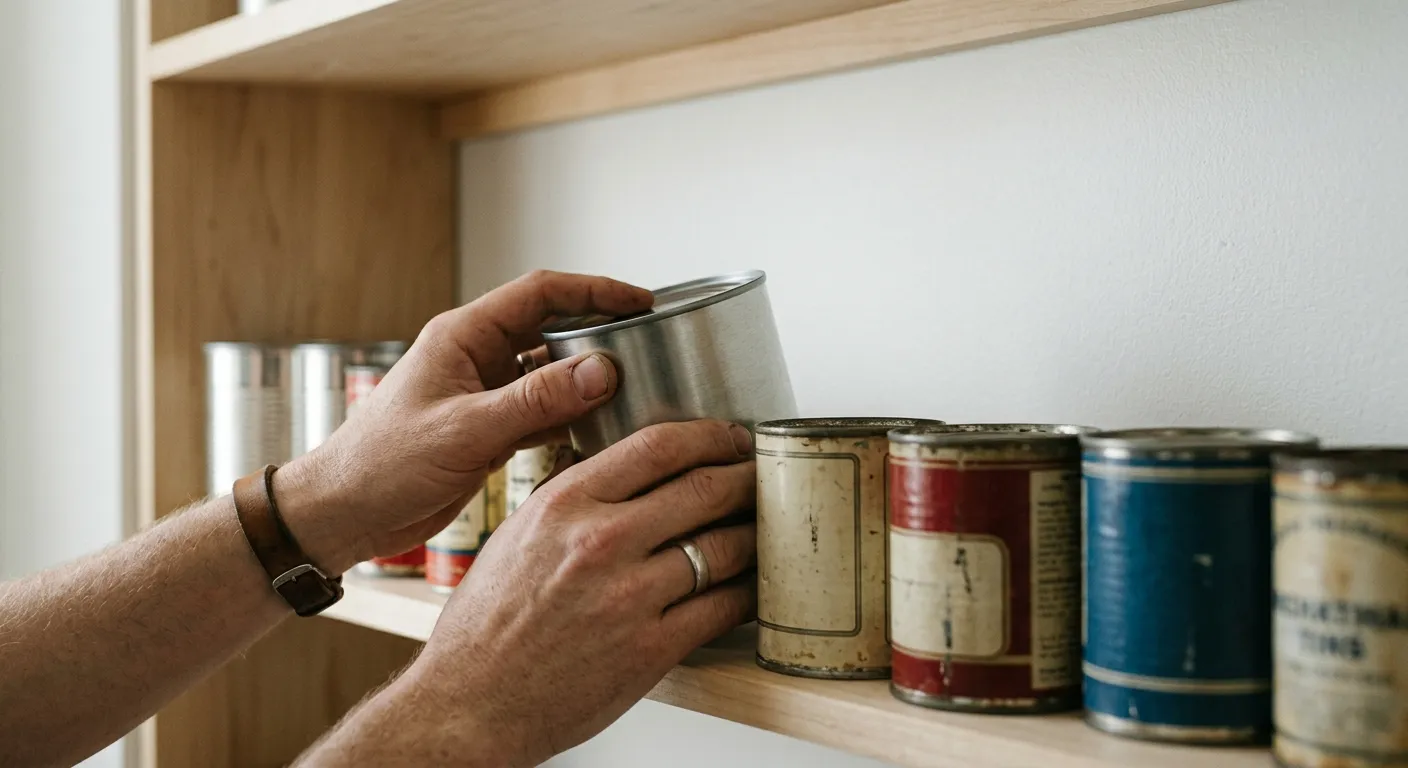
First in, first out (FIFO) means you use the oldest food first. New shopping goes at the back of the shelf, and you take from the front. FEMA puts it in one line: date the food with ink or marker, place new items at the back of the storage area and older ones in front.
That is all the method is. It only fails when the dates are missing, the shelf is a mess, or nobody looks at it. The rest of this page is about avoiding those three things.
Set up the shelf so it does the work
- Put like with like. All tinned tomatoes in one row, all pasta in one box. Mixed shelves hide old stock.
- Shelve by date within each row. Earliest date at the front. If two tins have dates months apart, they should not be mixed up.
- Shallow rows beat deep ones. A shelf that is two tins deep is easy. A deep cupboard where the back is a mystery is where things get lost. Use a small shelf riser, a tin dispenser or a plastic bin if the cupboard is deep.
- Keep dry goods off the floor and away from walls if you can, so you can see and clean around them. Catering guidance from New York State suggests at least six inches (15 cm) off the floor, and it is a good habit at home too.
- Write the date on anything without a clear one. Bags decanted into jars, freezer bags, and loose packets all need a marker date.
The routine: three habits
When you shop: put the new items behind the old ones. Take thirty seconds to write a date on anything that has none.
When you cook: take from the front. If you are choosing between two similar items, pick the one nearer its date, not the one you like the look of.
Every month or two: run your eye along the shelves and look for anything within a couple of months of its date. Plan those into the next few meals. The USDA suggests checking a pantry every few weeks and using canned goods that have been there a while.
Also do a longer check every six months. Michigan State University Extension suggests rotating an emergency supply about every six months. Pick two dates you will remember, such as when the clocks change, and check everything then.
What to do with food that is close to its date
Move it to the front and cook it first. If you cannot use it in time, give it away while it is still good. A food bank or a neighbour will take unopened tins with months left, not ones already past their dates.
Remember what the date means. A best-before or best-if-used-by date is about quality. The USDA says that for shelf-stable food, after that date the food is still safe to use if stored properly, though it may not taste or feel as good. A use-by date on perishable food is different, and you should follow it. High-acid tinned food such as tomatoes and pineapple lasts 12 to 18 months from the date, and low-acid tinned food such as meat and most vegetables lasts two to five years, provided the can is in good condition. Throw out anything that is bulging, leaking, rusted or deeply dented, and never taste food to check.
When rotation goes wrong
The common problems are predictable:
- Buying a lot of one thing at once, so it all expires together. Buy in smaller batches over time so dates are staggered.
- Hiding food in the loft, the garage or under a bed where you never look. If you cannot see it, you will not rotate it.
- No record. A list on the cupboard door, or an app that logs what you add and use, catches items you have forgotten.
A stockpile that has been badly rotated is not a disaster. Sort it, bin what is clearly spoiled, cook what is close, and start again with better habits.
Food rotation questions
How often should I rotate emergency food?
Look over it every month or two and do a full check about every six months. If you store what you normally eat and cook from it, you are rotating all the time anyway.
What is FIFO in food storage?
First in, first out. You use the oldest stock first and put new stock behind it, so nothing sits at the back until it expires.
Do I need to throw food out on its best-before date?
Not automatically. Best-before dates on shelf-stable food mark quality, not safety. Check the packaging is in good condition and use judgement, but do not eat anything from a bulging, leaking or badly damaged can.
How do I rotate food I bought in bulk?
Decant into smaller containers, date each one, and treat each container as a separate item. Open the oldest first and top up from the new bag only when the old one is finished.
Where this comes from
This page draws on FEMA: Food and Water in an Emergency, Michigan State University Extension, the USDA pantry checklist and the USDA FSIS guide to shelf-stable food.
Related guides
How to label and track your food stock
Dates, codes and a simple record that make rotation easy.
How long does canned food last?
What the dates on tins really mean.
Only stockpile food you actually eat
The easiest way to make rotation happen.
Where to store food at home
Heat and damp shorten shelf life more than time does.
Be prepared!