How to Start a Food Stockpile Without Wasting Money
Start with a week of food you already eat, then build to two. Here is how to work out how much you need, what to buy first and how to keep it from going to waste.
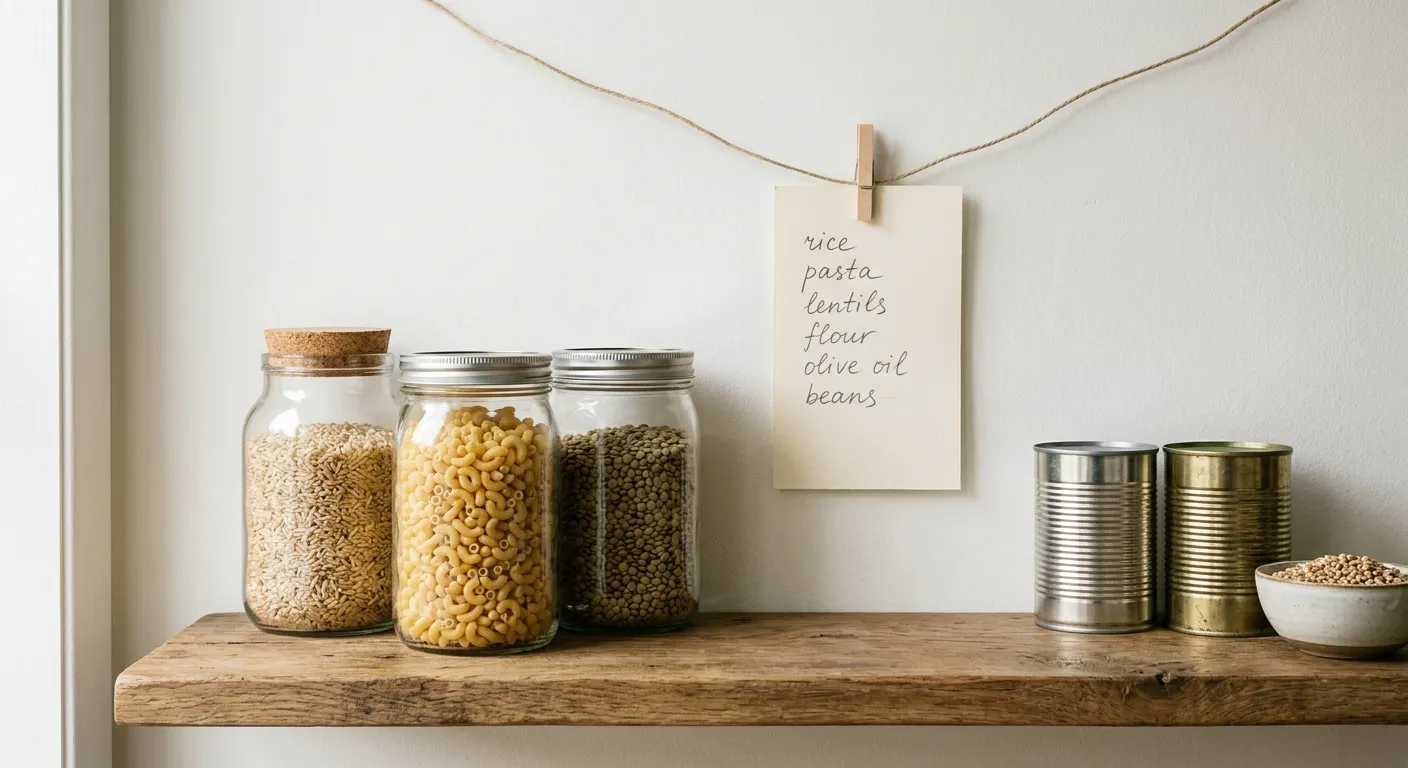
Start smaller than you think
Most people who give up on a stockpile do it because they started too big. They buy a bucket of freeze-dried meals, put it in the loft, and forget about it. Three years later half of it is out of date and nobody wants to eat the rest.
The official advice is more modest. The US government's Ready.gov site asks for a several-day supply of non-perishable food, and FoodSafety.gov says at least three days. FEMA suggests considering two weeks, even though it calls a full two-week cut-off unlikely. Three days is a starting point. Two weeks is a sensible target once the habit is in place.
Work out roughly how much you need
An adult eats somewhere around 2,000 calories a day, more if they are active or cold, less if they are small or older. Children vary a lot. Treat that as a planning figure, not a rule.
A worked example for two adults for 14 days:
- 2 people x 2,000 kcal x 14 days = 56,000 kcal
- Dry white rice has roughly 3,600 kcal per kilogram, so 1 kg covers nearly two days of calories for one adult, though you would not want to live on rice alone.
- If you want a third of the calories to come from rice and pasta, that is about 18,700 kcal, or around 5 kg of dry rice and pasta in total.
The rest comes from tins, oats, peanut butter, dried beans and lentils, cooking oil, and the small extras that make food worth eating. Prepparia's plan page does this sum for your household size and shows the gap against what you already have, which saves doing it on the back of an envelope.
What to buy first
Buy in this order, and stop when you feel covered:
- Water. A gallon (about 4 litres) per person per day is the usual guide. It is cheap, it does not need cooking, and it is the item most people forget. See our water guide.
- Ready-to-eat food. Tinned fish, meat, beans, vegetables and fruit that you can eat cold. If the power and gas are both off, this is what you will live on.
- Cooking staples. Rice, pasta, oats, flour, lentils, cooking oil, salt, sugar, stock cubes.
- Things that make it bearable. Tea, coffee, chocolate, spices, jam. FEMA and Ready.gov both list comfort foods. They are not frivolous when everyone is stressed.
- A manual can opener. Every guide lists one because people still forget it.
Add one or two extra items to your normal weekly shop rather than doing one enormous panic buy. A tin or two of each thing over ten weeks costs almost nothing you would notice.
Keep it useful, or it becomes waste
A stockpile only works if it is eaten and replaced. Put the oldest item at the front, write the date on anything without a clear one, and use from the stock in normal cooking. Then you are always buying new food to replace it, and the pantry never gets old all at once.
Two habits do most of the work: label what you buy (a date and a short code on every tin or bag), and check the shelf every few weeks. Our guides on rotation and labelling cover both.
Food stockpile questions
How much food should I store for an emergency?
At least three days for everyone in the household, and two weeks if you have space and budget. Official guidance from FEMA, Ready.gov and FoodSafety.gov starts at a few days and suggests building towards two weeks.
Do I need special emergency or freeze-dried food?
No. FoodSafety.gov says outright that it is not necessary to buy dehydrated or other emergency food. Ordinary tins, dry goods and packets you already cook with work fine, and you will actually eat them.
What is the cheapest way to build a stockpile?
Buy an extra tin or bag of things you already eat each time you shop, and use the oldest first. Spreading the cost over a couple of months is easier on the budget than a single big purchase, and you avoid buying food nobody likes.
How do I keep track of what I have?
Write the purchase or expiry date on each item and keep a simple list, on paper or in an app. The point is to know what is close to its date before it goes off.
Where this comes from
The amounts and timeframes above follow guidance from Ready.gov: Food, FoodSafety.gov: Food Safety in a Disaster or Emergency and FEMA: Food and Water in an Emergency. The calorie figures are planning estimates, not medical advice. Anyone with a medical condition, special diet, infant or pregnancy should get advice from a doctor or dietitian.
Related guides
Only stockpile food you actually eat
The one rule that makes a stockpile cheap to run.
How to rotate stored food
Keeping the oldest food at the front so nothing expires.
What food to buy for an emergency pantry
A shopping list by category, with typical shelf lives.
How to store water for emergencies
Food is the easy part. Water takes more planning.
Be prepared!