How to Store Water for Emergencies
How much water to keep, which containers are safe, how to fill and label them and when to replace what you have stored.
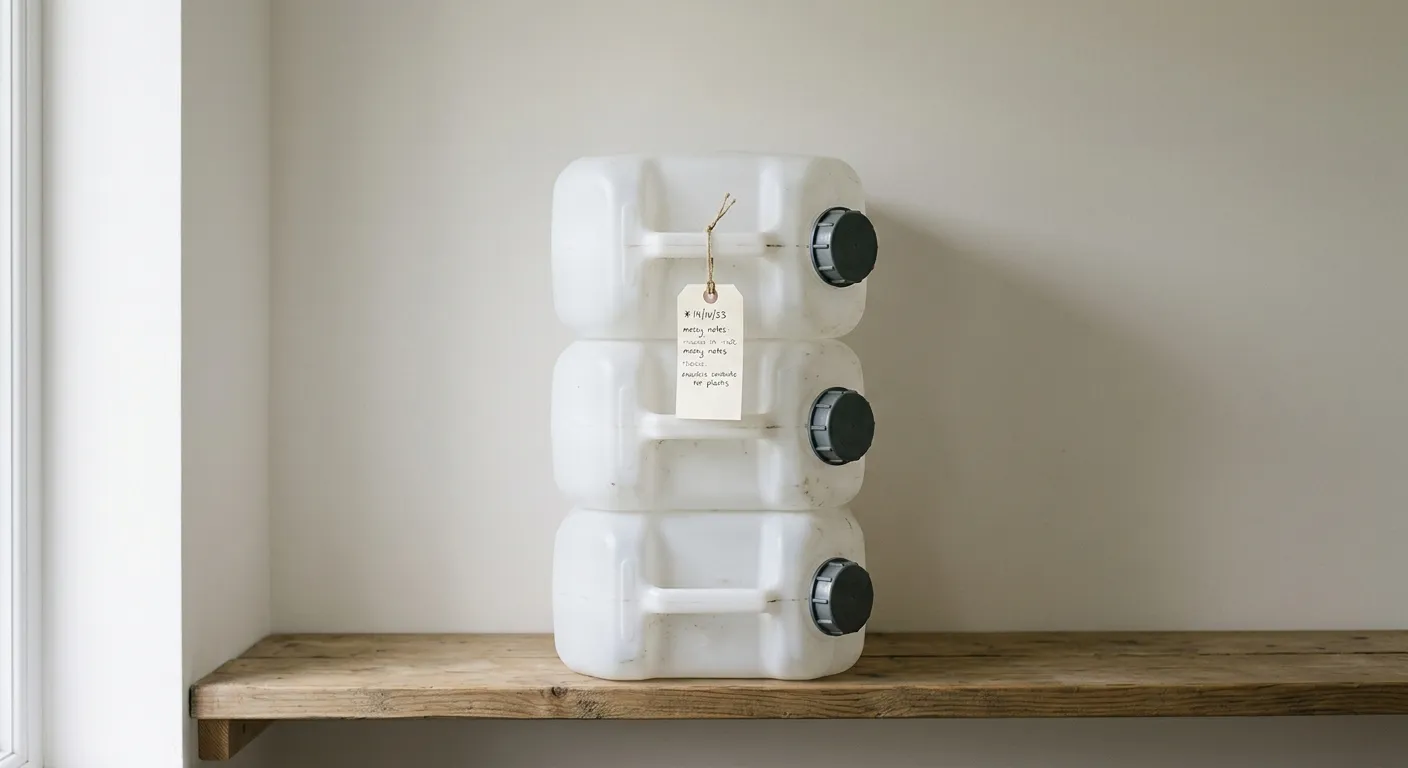
How much water
The standard guide, from the CDC and Ready.gov, is 1 gallon per person per day, which is about 3.8 litres, for drinking and basic sanitation. The CDC says to store at least three days' worth and try for two weeks if you can. For two weeks that is 14 gallons, or about 53 litres, per person.
Store more if you live somewhere hot (Ready.gov says needs can double in very hot weather), or if anyone is pregnant, nursing, very young or unwell. Oregon State University Extension adds a gallon a day for pets too. That means a household of four people and two pets needs about six gallons (23 litres) a day.
Which containers
Sealed bottled water is the simplest option. Keep it in the original container in a cool, dark place and follow the date on the bottle.
If you fill your own containers, the CDC recommends food-grade water storage containers, which you can get from camping or surplus suppliers. If you cannot get those, use containers that:
- close tightly,
- are strong and unbreakable, so plastic rather than glass,
- have a narrow neck if possible, so you can pour from it.
Do not use containers that held bleach, pesticides or other chemicals. Reused plastic drink bottles with screw tops are widely used, but they are thinner and more likely to leak, so many people prefer sturdier jerrycans or barrels.
For scale, the Oregon State University guide says two weeks' water for one person fits in fourteen 1-gallon jugs, or twenty-seven 2-litre bottles, or two 7-gallon containers.
Filling and sealing
- Wash the container with dish soap and rinse well.
- Sanitise it with a solution of 1 teaspoon of unscented household bleach in 1 quart (about 1 litre) of water. The CDC says the bleach should contain 5 to 9 percent sodium hypochlorite. Swirl it around, let it sit briefly, then rinse.
- Fill with clean water from a treated public supply. Water from a treated supply does not need further treatment before storing. If your water comes from a private well or untreated source, ask your local health authority about how to treat and store it.
- Close it tightly and label it with the words drinking water and the date.
Where to keep it, and when to replace it
Store water somewhere cool, ideally 50 to 70 F (10 to 21 C), out of direct sunlight, and away from petrol, pesticides and other chemicals. The CDC says to replace water you filled yourself every six months, and to follow the printed date on shop-bought water.
A good trick is to make the swap useful. When it is time to replace it, use the old water for the garden, for washing or for flushing, and refill. If stored water tastes flat, pour it back and forth between two clean containers to add air.
Keep a small bottle of plain, unscented household bleach too. It is what the CDC recommends for disinfecting water if you have to, and for cleaning. Follow the instructions from your local authority for how much to add.
Mark it on your calendar
Six months goes by quickly. Put the replacement date on the container and in your calendar, or track it as a stock item so it shows up when it is due, the same way as tins and packets.
Water storage questions
How much water should I store per person?
One gallon (about 3.8 litres) per person per day for at least three days, and ideally two weeks. Store more for heat, illness, pregnancy, young children and pets.
How long can stored tap water last?
The CDC advises replacing water you have stored yourself every six months. Sealed commercial bottled water should be used by the date on the bottle.
Can I use old milk or juice bottles?
Plastic screw-top bottles are sometimes used, but they must be washed well, sanitised and sealed. Milk bottles are hard to clean fully, and thin plastic can crack or leak. Food-grade containers are a better choice.
Do I need to treat tap water before storing it?
If it comes from a public supply that is treated, you generally do not. If it comes from a private well or untreated source, follow local health advice.
Where this comes from
Quantities and storage rules are from the CDC: How to create an emergency water supply, Ready.gov: Water and Oregon State University Extension: Survival basics, water. Follow your own local authority's advice, especially if your supply is private or untreated.
Related guides
Be prepared!