What Food to Buy for an Emergency Pantry
A practical shopping list by category, with rough shelf lives, focused on foods that store well, need little cooking and that people will actually eat.
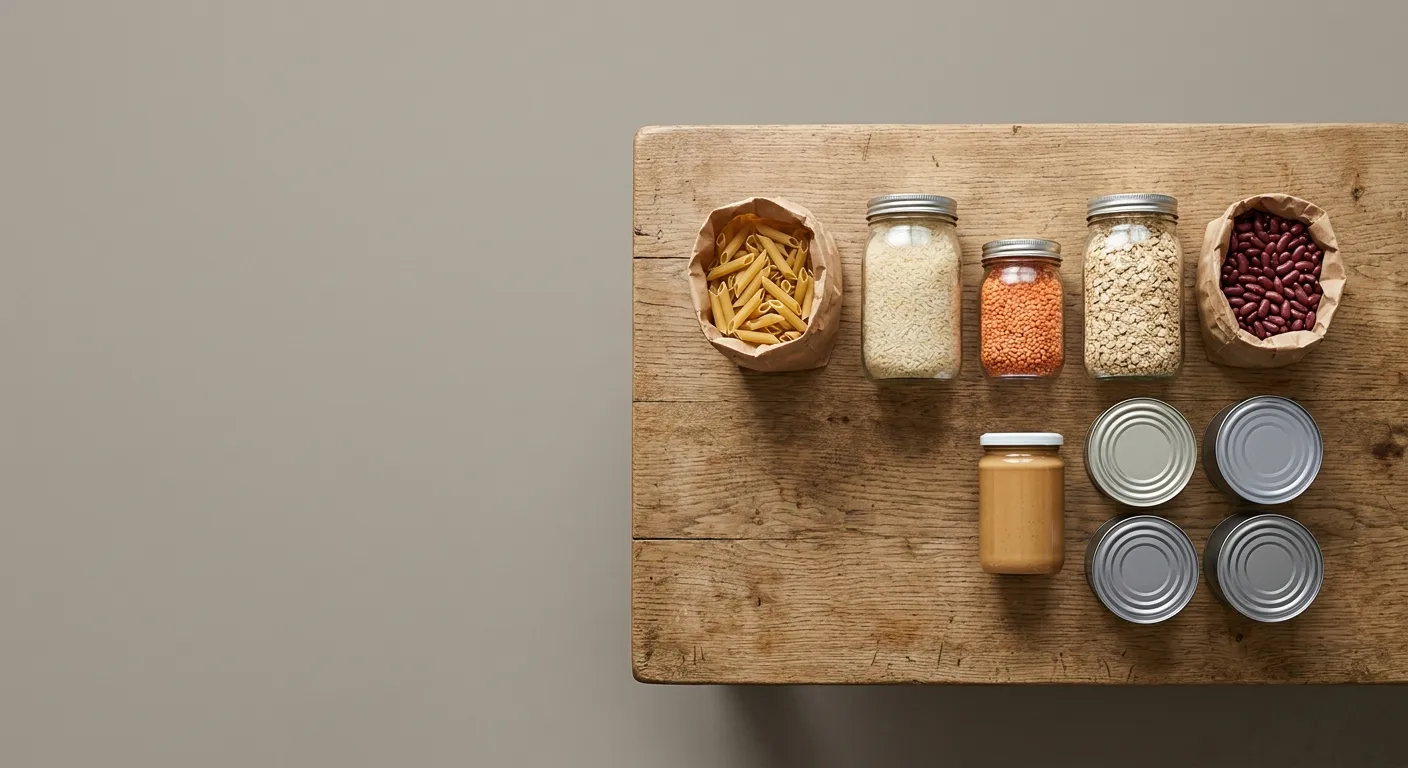
What makes a food good for storing
Government guidance keeps returning to the same few points. The food should keep a long time, need little or no cooking, water or refrigeration, and suit everyone in the household including babies and anyone on a special diet. FoodSafety.gov also says to go easy on very salty or spicy food, because it makes you thirstier when water may be short.
Add one more: people should like it. A stockpile of things nobody wants is a waste of money and a poor morale plan.
The list, by category
Shelf lives are rough guides for unopened food kept cool and dry. Always go by the date on the pack.
| Category | Good choices | Typical keeping time |
|---|---|---|
| Grains and starch | White rice, dried pasta, oats, flour, instant noodles, crackers | White rice and dry pasta keep for years. Oats and cereal, about a year. Crackers, several months |
| Protein | Tinned fish, meat and beans, dried lentils and beans, peanut butter, nuts | Tins 2 to 5 years for low-acid foods. Dried beans and lentils, years, but older ones take longer to cook |
| Fruit and veg | Tinned tomatoes, fruit and veg, dried fruit, tomato passata | Tinned fruit and tomatoes 12 to 18 months. Dried fruit around 6 to 12 months |
| Fats and flavour | Cooking oil, salt, sugar, stock cubes, herbs, spices, jam, honey | Oil, a year or so. Salt and sugar keep almost indefinitely |
| Dairy alternatives | UHT or shelf-stable milk, powdered milk, tinned milk | UHT milk several months. Powdered milk 6 months boxed, longer in sealed tins |
| Drinks | Tea, coffee, instant hot chocolate, squash, bottled water | Tea and coffee a year or more. Bottled water: see the date |
| Comfort | Chocolate, biscuits, boiled sweets, tinned puddings | Varies. Hard sweets keep well |
The FEMA guidance suggests using dried fruit, boxed powdered milk, crackers and potatoes within about six months, and tinned soups, fruit, vegetables, cereals and peanut butter within about a year. Salt, sugar, white rice, dry pasta and instant tea and coffee last much longer stored properly.
Some choices that catch people out
- Brown rice and wholemeal flour go stale sooner than white because of their oil content. If you eat them, rotate them faster.
- Cooking oil goes rancid. Small bottles that you use up are better than one big one.
- Ready-to-eat tins matter more than you think. If there is no power or gas, you want food you can eat straight from the tin. Include a manual tin opener, and a spare, because they break.
- Foods that need lots of water such as dried beans and pasta take water and fuel to cook. That is fine if you have both, but keep a good proportion of things that do not.
- Baby food and formula, pet food and special diets should be planned separately. Formula has a date printed on it, and the dates matter.
- Watch the sodium in a lot of tinned food. Draining and rinsing beans and vegetables helps if you have the water.
Do not forget the non-food supplies
You need a manual tin opener, plates and cutlery that do not need washing up if water is short, and a way of heating food safely. Our guides on cooking and fuel, water storage and hygiene cover those. Food is only part of what makes a pantry work.
What to buy questions
What are the best foods to stockpile?
Rice, pasta, oats, tinned fish, meat, beans and tomatoes, peanut butter, dried lentils, cooking oil, salt, sugar and tea or coffee. The best ones are those you already eat.
What food lasts longest?
Salt, sugar, honey, white rice and dry pasta last for years if kept dry and sealed. Low-acid tins last two to five years. Most other things last months to a year.
Should I buy freeze-dried emergency meals?
They are optional. FoodSafety.gov says you do not have to buy dehydrated or other special emergency food. They are light and long-lasting, which suits a go-bag, but for a home pantry ordinary foods are cheaper.
Where this comes from
This page draws on FoodSafety.gov, Ready.gov, FEMA: Food and Water in an Emergency and the USDA FSIS shelf-stable food page. Keeping times are typical figures; follow the date on the pack.
Related guides
Be prepared!