Emergency Cooking When the Power or Gas Is Off
How to eat and heat food in a power cut: no-cook meals first, what you may use outdoors, why indoor camping stoves are dangerous, and the official carbon monoxide numbers.
The order of operations
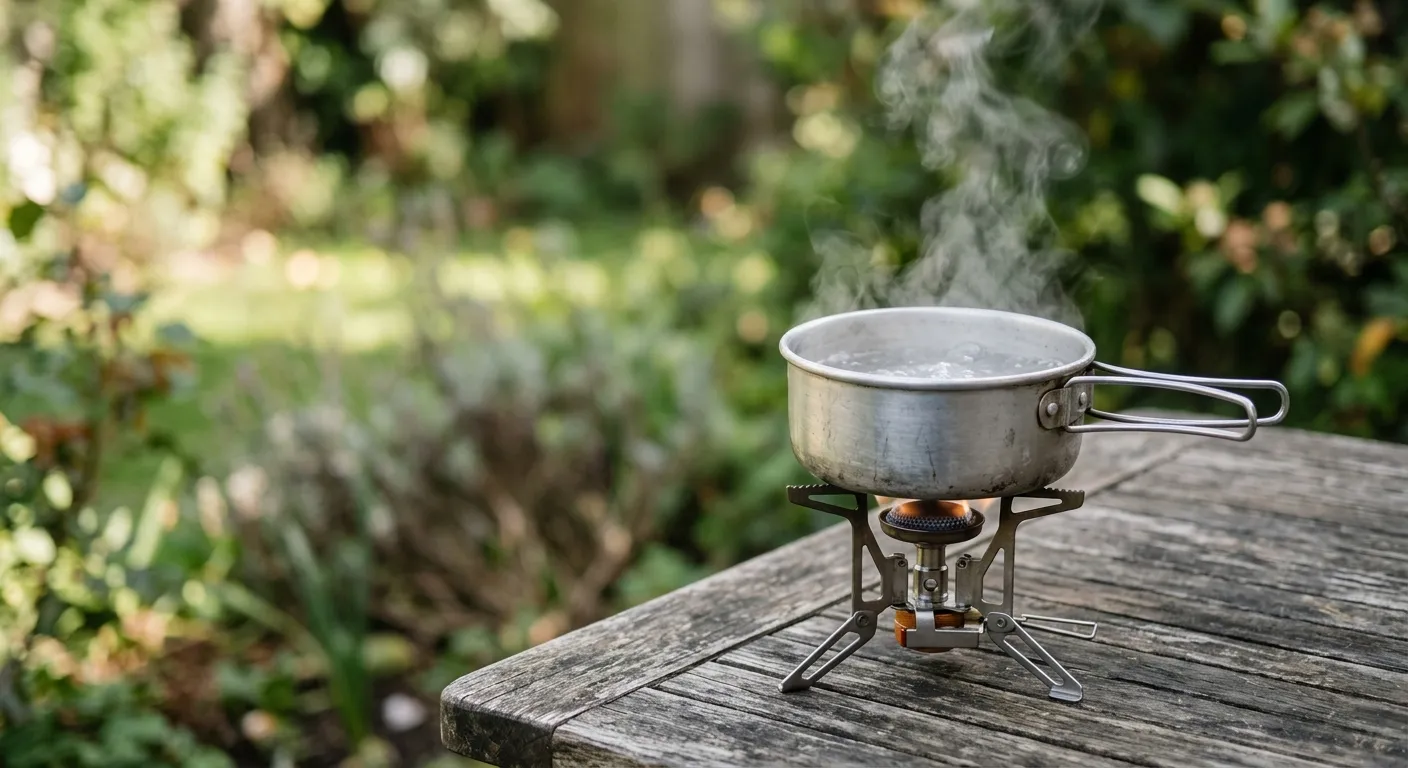
When the cooker dies, do not start by lighting something. Eat the food that needs no heat first, then use a sound fireplace or wood stove if you have one, then an outdoor camping stove or barbecue. Indoor combustion is the bit that kills people.
CDC figures for carbon monoxide (CO), which has no colour and no smell:
- More than 400 Americans die each year from unintentional CO poisoning not linked to fires.
- More than 100,000 visit an emergency department.
- More than 14,000 are hospitalised.
CPSC estimates nearly 100 of those deaths a year involve portable generators. CDC's power-outage page says never to use a generator, charcoal grill, lantern or portable camping stove inside a home, tent or camper, and to keep generators more than 20 feet (about 6 metres) from windows, doors and vents. Opening a window does not make an indoor stove safe. FEMA gives the same 20-foot outdoor rule for portable gas stoves and grills.
Fit a CO alarm near bedrooms and any room with a fuel-burning appliance. Use one with a battery backup so it still works in the cut.
Eat without cooking
Ready.gov's emergency food list is built around foods that need no fridge and no heat: ready-to-eat canned meat, fruit and vegetables, peanut butter, dried fruit, cereal or granola, protein bars, nuts, shelf-stable milk, and a manual can opener. Tins can be eaten cold. If water is short, choose foods that are not very salty.
A no-cook day for one adult is straightforward:
- breakfast: cereal or oats eaten dry or with UHT milk; dried fruit
- lunch: tinned fish or beans, crackers, peanut butter
- dinner: another tin, canned fruit, nuts
- kettle: skip it, or boil outdoors later
That is also why a pantry list should not be mostly dry rice and pasta. Those need water and fuel. Keep a few days of ring-pull food even if you own a stove.
If the fridge is involved: Ready.gov says an unopened fridge keeps food cold about 4 hours. Perishable food that has been above 40 F (4 C) for 2 hours or more should be thrown away. 25 pounds (11 kg) of dry ice will keep a 10 cubic foot freezer below freezing for 3 to 4 days, without sitting on the food. Wear heavy dry gloves.
What you can heat, and where
| Method | Where | Notes |
|---|---|---|
| No-cook tins, peanut butter, cereal | Indoors | First choice. No CO, no fire risk from fuel |
| Built-in gas hob, if the gas still flows | Indoors, as designed | Matches if the ignition is electric. Do not use the oven to heat the room |
| Wood stove or fireplace | Indoors, if the chimney is sound and the flue is open | Oklahoma State University Extension: never with charcoal |
| Camping stove, gas barbecue, charcoal, hibachi | Outdoors only, well away from walls, doors and windows | CDC: never in a home, tent, camper or garage |
| Generator | Outdoors, more than 20 ft / 6 m from openings | CPSC: not on a porch or in a carport |
| Candle warmer / chafing fuel | Only as the maker intends | FEMA lists these as a way to warm food, never near anything that can catch |
CDC is also clear: never heat the house with a gas oven, and never burn charcoal indoors, including "white" or seemingly burned-out coals.
A small screw-in camping stove is enough to boil water and heat a tin. Check the run time printed on your canister. Light it outside once a year so you still remember how the valves work.
Fuel and water you will actually use
Boiling is the expensive job. Heating a ready-to-eat tin is cheap. If your emergency meals are pasta, rice, dried beans or freeze-dried pouches, your fuel store has to match the water they need as well as the burner time.
FEMA's water figure is 1 gallon (3.8 L) per person per day for drinking and sanitation, before cooking. Dry beans and pasta both drink extra water. That is another reason official lists lean on canned food.
Store gas canisters upright, cool, out of the sun, off the stove, and away from children. Do not leave them in a car. Change canisters outside with the stove cold. Keep matches or a lighter with the stove, in a waterproof pouch, not loose in a drawer of batteries.
Emergency cooking questions
Can I use a camping stove indoors in a power cut?
No. CDC says never to use a portable camping stove, charcoal grill or generator inside a home, tent, camper or garage. Carbon monoxide has no smell. Open windows do not make it safe.
How can I cook without electricity or gas?
Eat no-cook food first. Then use a sound fireplace or wood stove, or a camping stove outdoors at least 20 feet from doors and windows. Tins can be eaten cold.
How long will fridge food last in a power cut?
Ready.gov: about 4 hours in an unopened fridge. Throw away perishable food that has been above 40 F (4 C) for 2 hours or more. A full freezer stays cold longer than a half-empty one.
Do I need a carbon monoxide alarm?
Yes if you have any fuel-burning appliance, and especially if you might run a generator or stove during a cut. Use a unit with battery backup. CDC reports more than 400 unintentional non-fire CO deaths a year in the US.
Where this comes from
CO deaths, indoor stove bans and the 20-foot generator rule: CDC: Carbon monoxide poisoning basics and CDC: What to do during a power outage. Generator deaths: CPSC hurricane-season CO warning. Outdoor cooking distance: FEMA, safe cooking methods during a power outage. Fridge and dry-ice figures: Ready.gov: Food. Always follow your stove manual and local fire-service advice.
Related guides
Be prepared!