Emergency Cooking and Fuel: What Is Safe Indoors and What Is Not
How to cook and boil water when the power or gas is off, which stoves must stay outside, and how to store fuel canisters safely.
The main rule
Never use a camping stove, gas ring, barbecue, charcoal or a generator inside a house, garage, tent or car. They give off carbon monoxide, which has no smell or colour and can kill. Opening a window does not make it safe.
FEMA's guidance says to use a portable gas stove, camping stove or grill outdoors only, and at least 20 feet (about 6 metres) from windows. It also warns against charcoal grills and generators indoors. Carroll County, Georgia's emergency FAQ spells out that unvented combustion appliances burn up the oxygen and produce fumes, and that room ventilation does not get rid of them.
Fit a carbon monoxide alarm in any room with a fuel-burning appliance, and one near bedrooms. Test it monthly.
What you can do
- Eat food that needs no cooking first. Tinned fish, beans, fruit, peanut butter, crackers and cereal cover a few days without any fuel. Ready.gov's list is built around this.
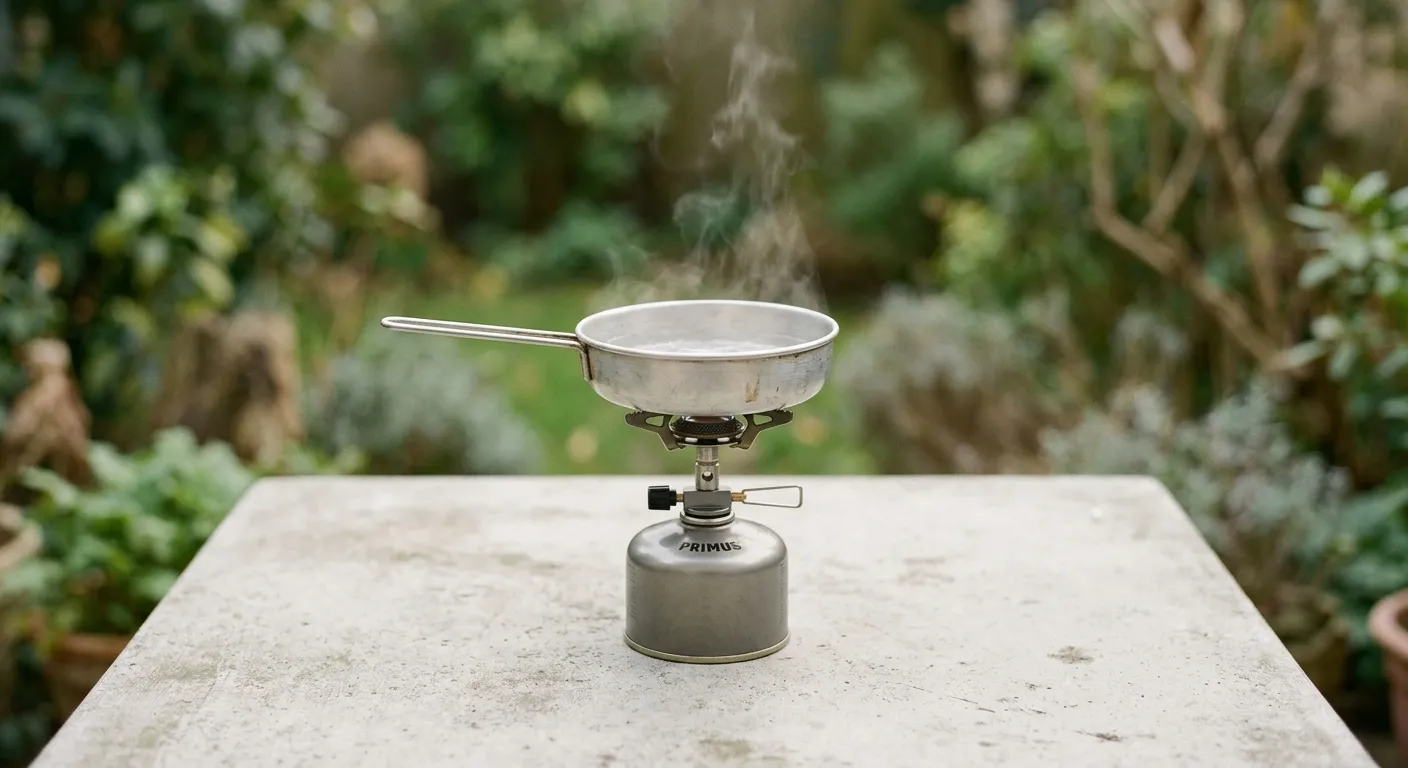
- Use an outdoor stove for anything hot. A small gas or multi-fuel camping stove on a patio or balcony with good airflow, well away from walls, doors and windows, works well. Keep it on a flat, stable surface.
- Use a sound fireplace or wood stove for cooking if you have one. Oklahoma State University Extension says this is fine if the chimney is sound and the flue is open, and never with charcoal.
- Be careful with candle warmers and chafing dishes. FEMA lists them as alternative heat sources for warming food, used as the maker intends and never near anything flammable.
- Boil water when in doubt. If the water supply may be contaminated, follow your local authority's advice on boiling or treating it.
A small stove uses little fuel for boiling water and heating a tin, but burn times vary a lot. Check the run time printed on your canister and stove, and plan your spare count from that.
Storing fuel canisters safely
Gas canisters (butane, propane or mixes) are the most common. Manufacturer manuals and safety agencies give consistent advice:
- Keep canisters upright, cool and out of the sun. WorkSafe NZ notes canisters left on car parcel shelves have ruptured.
- Remove the canister from the stove before storing either.
- Store them outdoors or somewhere ventilated, such as a shed with airflow, and away from ignition sources and children. One stove manual states they must not be stored in a house, garage or other enclosed space, so read the instructions for your model and follow them.
- Avoid shocks and knocks.
- Change canisters outside, when the stove is cool and nothing else is lit.
- Never put an empty or part-used canister on a fire. Dispose of empty ones according to your local recycling rules.
- Match the fuel to the stove. Buying the wrong type is common.
Also keep the manual and a short note of which fuel, and how much, you have.
Check the stove before you need it
Light the stove outside once a year, with a pan of water, to check that it works and that you know how it goes together. Check the connection and any seals. Make sure you know where the shut-off is. Keep a lighter or matches with it.
Track fuel canisters in your stock list, with the purchase date, so you know you have enough and you use older ones first.
Emergency cooking questions
Can I use a camping stove indoors in a power cut?
No. Camping stoves, barbecues and heaters that burn fuel produce carbon monoxide and use up oxygen, and open windows do not make them safe. Use them outdoors only.
How can I heat food without electricity or gas?
Use an outdoor camping stove, a sound fireplace or wood stove, or eat foods that need no heating. Tins can be eaten cold.
How should I store gas canisters?
Upright, cool, out of direct sun and away from ignition sources and children, following the maker's instructions. Do not leave them in a hot car.
Do I need a carbon monoxide alarm?
Yes, if you have any fuel-burning appliance, and especially if you might cook or heat in a power cut. Test it regularly.
Where this comes from
See FEMA: safe cooking methods during a power outage, WorkSafe NZ: camping appliance safety, Oklahoma State University Extension and Carroll County emergency FAQ. Always follow your stove maker's manual and local fire-service advice.
Related guides
Be prepared!