Matches, Lighters and Fire Starters: What to Keep at Home
A dry box of matches is still the most reliable way to make fire. How to store them, what backups to keep and the safety rules that matter.
Why keep them
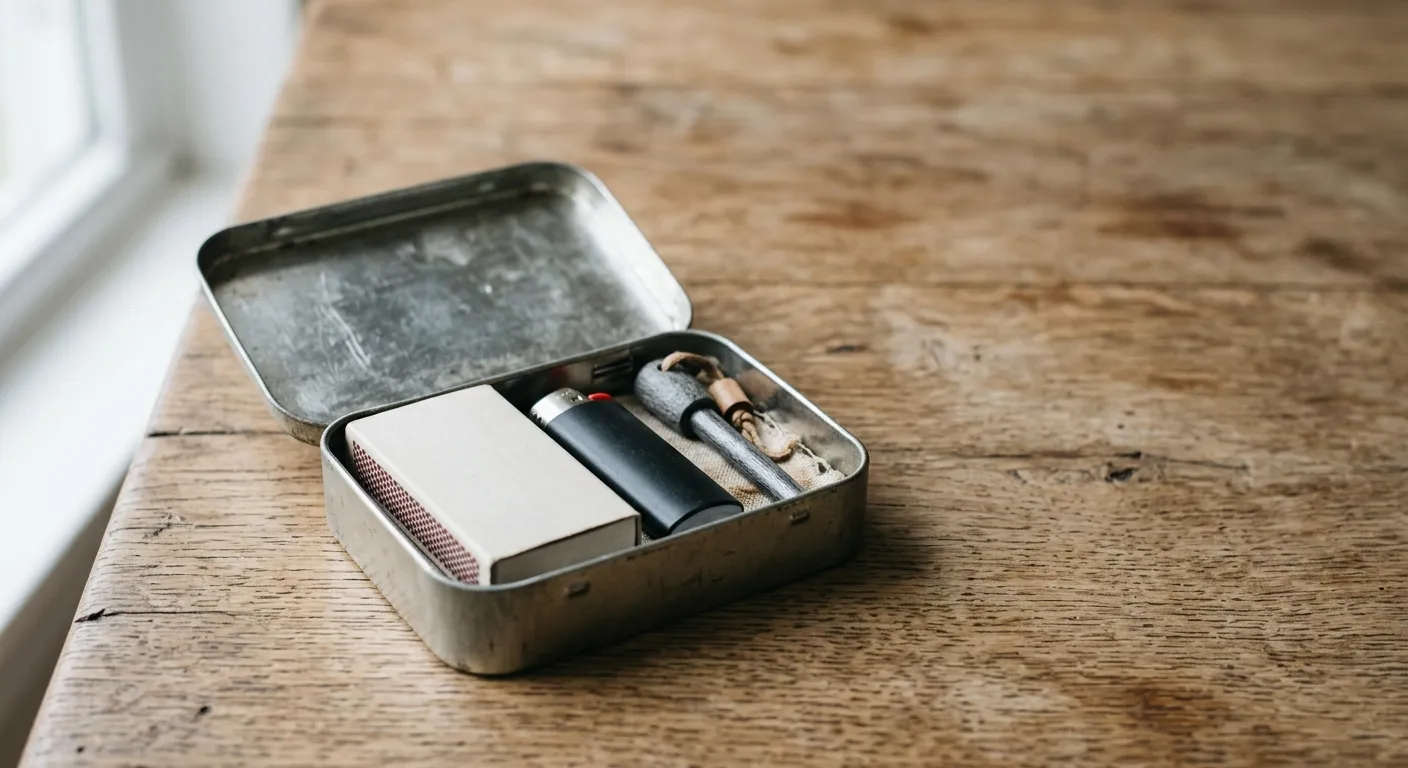
Matches and lighters are cheap, tiny and need no power. If you have a gas hob with electronic ignition, it may not light in a power cut, and a match solves that. They are also how you light a camping stove or a fireplace, and how you get a candle going in a real emergency.
They need a bit of care, though. Keep them dry, away from children, and never in a place that gets hot.
Matches: storage that works
Ordinary safety matches (the kind that strike only on the box) are the safest to have in a house. Store them:
- Dry. Damp is the enemy. A screw-top jar, an airtight tin or a zip bag with a small silica gel packet keeps them dependable for years.
- In their box, with the striker strip. Keep a spare strip or a second box, since the strip wears out and cannot be replaced by anything else.
- Cool. Not in the loft, the car glovebox in summer or above the cooker.
- Out of reach of children, ideally in a high or lockable cupboard.
Matches do not have a fixed printed expiry date, but they degrade if damp gets in. Test one from each box once a year. If they will not light, replace the box.
Waterproof or stormproof matches burn even in wind and rain and are worth having in a go-bag or car kit. Read the packaging for how they are stored.
Lighters and backups
A disposable gas lighter is reliable and lasts a good while, but it can leak fuel over time, lose pressure in the cold and fail if damp gets in. Keep a few, in a drawer, not in a hot car. Check them each year. Lighters should be stored away from heat and never in direct summer sun in a vehicle, because the gas can expand and split the case.
A ferro rod (a small bar that throws sparks when scraped with a steel striker) works when wet and does not run out for thousands of strikes. It needs some practice and dry tinder, so try it before you rely on it. Windproof lighters work better outdoors. Keep a spare of whatever type you like.
For tinder: cotton wool rubbed in petroleum jelly, dry paper, or commercial firelighters all help. Store them in a tin or jar so they stay dry.
Safety
- Keep lighters and matches away from children. A lockable drawer is best.
- Never use them to light a stove, grill or heater indoors unless the appliance is designed for indoor use. Camping stoves, propane and barbecues are outdoor-only. See our cooking guide.
- Do not store fuel next to matches.
- Keep a fire extinguisher or fire blanket in the kitchen, and know how to use it.
- Fit working smoke and carbon monoxide alarms, and check their batteries.
If you are ever unsure whether it is safe to light something, do not.
Matches and lighters questions
How long do matches last in storage?
Kept dry, safety matches last for years. Damp is what ruins them, so use an airtight container and test them once a year.
Are waterproof matches worth buying?
For a go-bag, car or outdoor kit, yes. For the kitchen drawer, ordinary safety matches in a dry container are fine.
Is it OK to leave a lighter in the car?
Not in hot weather. Heat can make the fuel expand and damage the lighter, and it is a fire risk. Keep it in a bag you carry, or keep a windproof or waterproof alternative in the kit.
A note on sources
This guide is practical advice rather than a summary of a single official source, and safety points follow common fire-service guidance. Your local fire and rescue service will have specific advice for your area. Carbon monoxide and camping-stove points are from FEMA's power outage cooking FAQ and WorkSafe NZ's camping appliance safety page.
Related guides
Be prepared!