What Is a Go Bag for Emergencies?
A go bag is a portable kit you can grab if you have to leave home quickly. What it is for, how it differs from a home pantry, and what Ready.gov actually tells you to pack.
The short answer
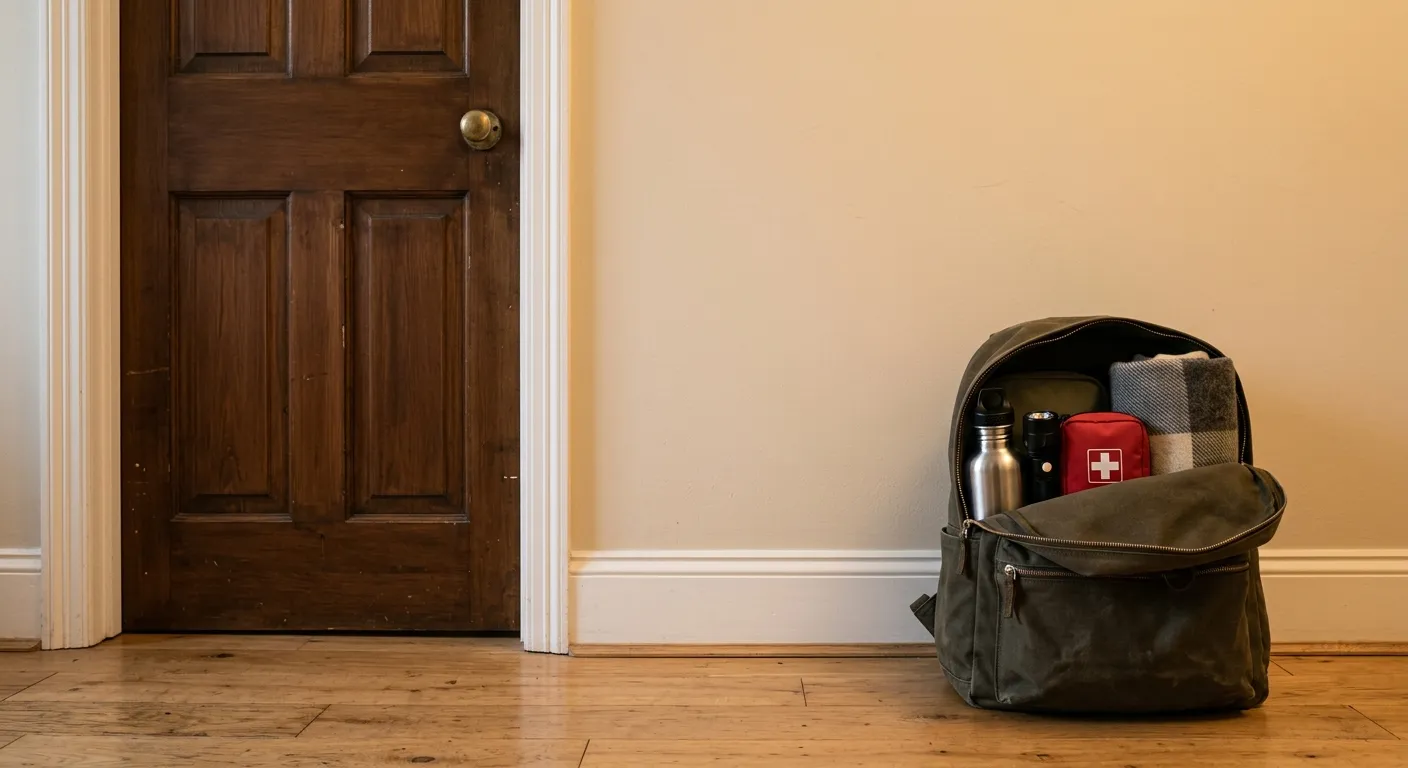
A go bag is a small, ready-packed kit you can pick up and leave with if you have to get out of the house in a hurry: a flood, fire, gas leak or evacuation order. Ready.gov calls the same idea a disaster supplies kit and a grab-and-go case. It is not a pantry, and it is not a weeks-long wilderness pack. It needs to be light enough to carry, packed in advance, and kept where everyone in the house can find it.
Ready.gov's current kit page says that after an emergency you may need to survive on your own for several days, and that you should keep a full kit at home plus smaller portable kits at work and in the car. The work kit is for sheltering at work for at least 24 hours. A go bag is that portable kit.
Go bag, home kit and bug-out bag
| Name | What it is for | Typical duration |
|---|---|---|
| Go bag / grab-and-go kit | Leaving home quickly | Several days (often planned as 72 hours) |
| Home emergency kit / pantry | Staying put through a power cut or storm | Several days to two weeks |
| Car kit | Breakdowns, delays, being stranded | Hours to a day or two |
| Bug-out bag | A longer, heavier pack some people build for remote travel | Often a week or more; not an official Ready.gov term |
Ready.gov is explicit that you do not know where you will be when something happens, so you prepare home, work and car. FEMA's older Food and Water in an Emergency booklet still uses a three-day portable kit as the basic disaster-supplies list, and separately tells households to consider a two-week food and water store at home. The go bag covers the first of those. The pantry covers the second.
What Ready.gov puts in the kit
The Ready.gov Build a Kit list, last updated 1 July 2026, is the official US starting point. Quantities that agencies actually publish:
- Water: one gallon (3.8 litres) per person per day, for drinking and sanitation. For a three-day go bag that is 3 gallons / 11.4 litres per person. FEMA splits that older figure as about two quarts for drinking and two quarts for food and hygiene.
- Food: at least a several-day supply of food that does not need a fridge, cooking, water or special preparation, plus a manual can opener.
- Light and information: a torch (flashlight), extra batteries, and a battery or hand-crank radio that can receive NOAA Weather Radio tone alerts.
- Signalling and air: a whistle; a dust mask; plastic sheeting, scissors and duct tape for sheltering in place.
- First aid kit and extra batteries.
- Sanitation: moist towelettes, rubbish bags and plastic ties.
- Utilities and navigation: a wrench or pliers to turn off utilities; local maps.
- Phone: the phone itself, chargers, and a backup battery or power bank.
Ready.gov then adds, based on the household: prescription medicines (it notes that about half of all Americans take a prescription medicine every day), glasses, infant formula and nappies, pet food and extra water, cash, copies of insurance, ID and bank records in a waterproof container, a sleeping bag or warm blanket each, a change of clothes and sturdy shoes, matches in a waterproof container, hygiene items, and something for children to do.
Pack the small things in airtight bags, and put the whole kit in a rucksack, duffel or similar that you can actually carry. Plastic bins are fine for the home store. They are a poor go bag.
How much water and food to put in one bag
Agencies do not publish a weight limit. They publish duration and water. Use those, then stop when the bag is too heavy to walk with.
| Household | 3-day water in the go bag | Notes |
|---|---|---|
| 1 adult | 3 gal / 11.4 L | Plus a way to get more if you are delayed |
| 2 adults | 6 gal / 22.7 L | Split across two bags if one person cannot lift it |
| 2 adults + 2 children | 12 gal / 45 L | Children carry their own small bag with water, a snack and a comfort item |
Water is heavy (1 litre is 1 kg; a US gallon is about 3.8 kg). That is why a go bag holds a few days, not a fortnight, and why the two-week water store belongs at home. For food, put in things that need no heat: bars, nuts, dried fruit, peanut butter, crackers, ring-pull tins. Ready.gov's food page lists ready-to-eat canned meat, fruit and vegetables, protein or fruit bars, dry cereal or granola, peanut butter, dried fruit, canned juices, shelf-stable milk, high-energy foods, infant food and comfort foods.
One bag per adult is more useful than one giant household bag. If you would leave it behind, it is too heavy.
Where to keep it, and how often to refresh it
Keep the bag in a designated place, ready if you have to leave quickly, and make sure everyone knows where it is. Ready.gov's maintenance list is short: keep canned food cool and dry, store boxed food in closed containers, replace expired items as needed, and rethink the kit every year as the household changes.
A practical home rhythm is twice a year, at the clock change:
- Empty the bag and check every torch, radio and power bank.
- Replace food, water and batteries that are near their dates.
- Update medicines, document copies and cash.
- Swap clothing for the season and for growing children.
Do not leave medicines, gas lighters, lithium batteries or chocolate in a car through hot weather. The car kit is a separate, tougher subset.
Go bag questions
What is a go bag for emergencies?
A packed, portable kit you can grab if you have to leave home quickly. Ready.gov describes the same thing as a grab-and-go disaster supplies kit, meant to cover several days of water, food, light, first aid, documents and phone power.
How long should a go bag last?
Plan for several days. Three days (72 hours) is the usual working figure, with one gallon of water per person per day. The larger two-week store belongs at home, not in the bag.
Is a go bag the same as a bug-out bag?
In everyday use people mix the names. Official US guidance talks about a disaster supplies kit and a grab-and-go case, not a bug-out bag. A bug-out bag is a longer, heavier pack some people build; it is not required for a basic evacuation kit.
What is the most important thing in a go bag?
Water, a torch, your medicines, copies of ID and insurance, and a way to power or replace your phone. Ready.gov also puts a radio and a whistle on the basic list because networks fail.
Where this comes from
Kit contents and the grab-and-go / home / work / car split are from Ready.gov: Build a Kit (updated 1 July 2026) and the Ready.gov emergency supply list PDF. Water volume and the two-week home store are from FEMA, Food and Water in an Emergency. Food examples follow Ready.gov: Food. This is a packing guide, not an evacuation order. Follow your local emergency service if they tell you to leave.
Related guides
Be prepared!