A UK Household Emergency Plan
A household emergency plan is a short note of where you will meet, who you will call, and how you will manage for three days if the power, water or phones fail. In England, Scotland and Wales the number for a power cut is 105.
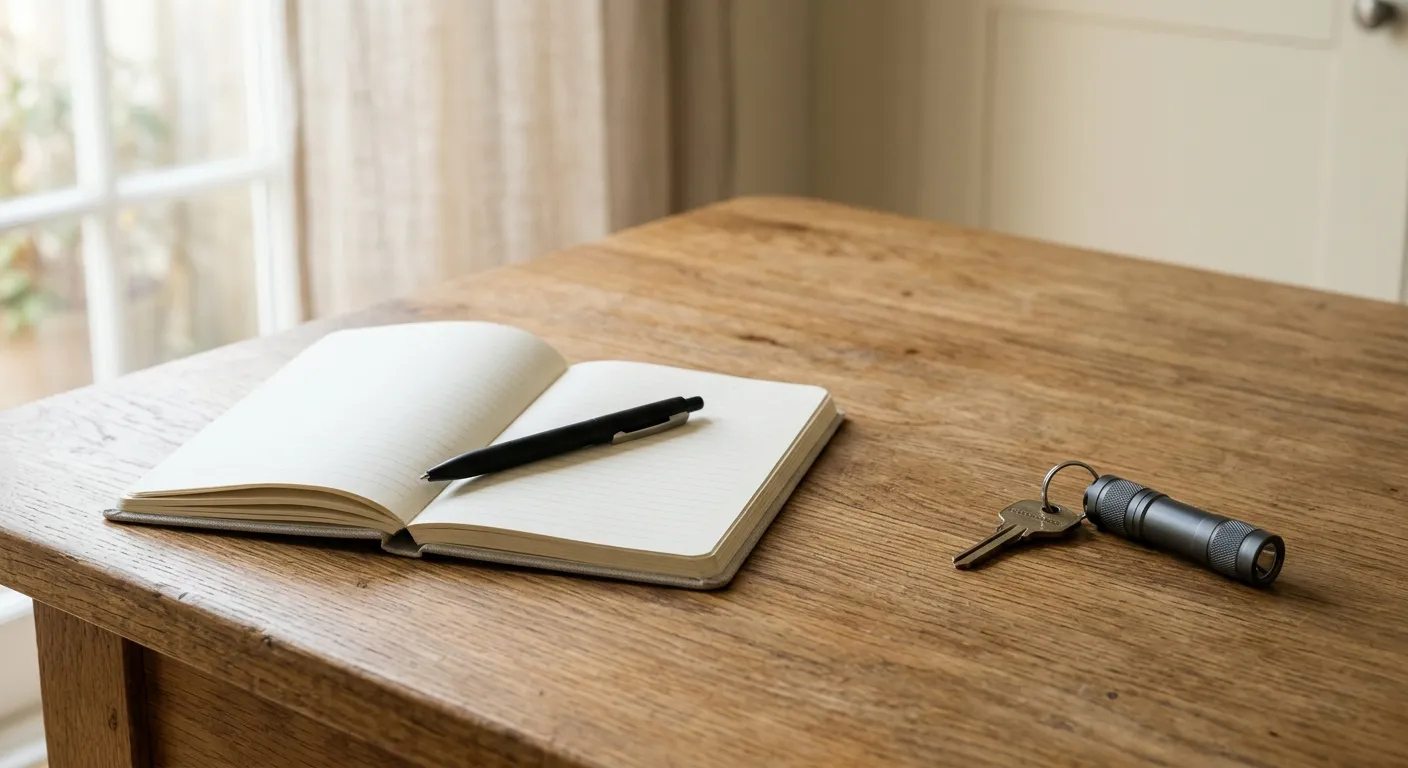
One page, on paper
Be Ready asks you to be able to cope for three days. The kit is the supplies. The plan is the page you can read in the dark, or when the phone has died. Keep it with passports, insurance and birth certificates, and tell one other adult where it is.
Copy this onto paper. Fill the blanks. Do not leave the only copy in a notes app.
| Line | Write this |
|---|---|
| Meeting point if we cannot get home | A place that is easy to find and open to the public, or a relative's home if that house is safe |
| Who checks on whom | Name, address, and what 'no phone call' means: you go in person |
| Power cut, England, Scotland and Wales | 105 |
| Power cut, Northern Ireland | 03457 643643 |
| Gas emergency, Great Britain | 0800 111 999. Do not turn the supply back on yourself |
| Other numbers | Family, the person who lives alone, school, insurer, GP surgery |
| Radio | The FM station you use for news, and its frequency |
| Medicines | Name, dose and when each person takes it |
| Priority Services Register | Whether you have signed up, and which supplier |
| Where the kit is | Water, food, torch, radio, first aid box, grab bag, stopcock |
The numbers in that table are the ones published on the Be Ready emergencies page. Northern Ireland gas emergencies use the number on the supplier's bill. The electricity number there is the one in the table.
If the power goes out
Call 105 in England, Scotland and Wales, or 03457 643643 in Northern Ireland, to report a power cut and to hear what the network knows. The call is free. Then:
- Use the torch. Be Ready prefers torches to candles.
- Leave the fridge and freezer closed. A full freezer stays cold longer than one you open every twenty minutes.
- Eat the food that will not survive, before you open the long-life tins. The three-day kit is the food that does not need a cooker.
- Check on the person you named, in person if you cannot get through. Agree that visit before the outage, not during it.
- Listen to the FM station you wrote down. A battery or wind-up radio is on the checklist because the phone may be the thing you are trying to save.
- If you rely on mains-powered medical equipment, the Priority Services Register is how the electricity, gas and water companies know you need extra support. Signing up is free. Children under five are among the households who can join. In England, Scotland and Wales the sign-up site is thepsr.co.uk. In Northern Ireland the equivalent is the Customer Care Register with your supplier.
Charge the power bank on your six-month kit check, not when the lights have already gone. It will run a phone or a compatible medical device for a while. It will not run a house.
People, including children
Agree the meeting point with everyone who can understand it, including children old enough to find it. Practise the home address and a parent's mobile number. Be Ready points families to Staywise for material written for children, and it is explicit that children should know how and when to call 999.
Check the school or nursery has your current numbers. Ask what they do if you cannot be reached in a power cut or in severe weather. They should already have a plan. Yours is the pickup arrangement around it.
On the phone itself, you can add an emergency contact or medical note that can be read without the passcode. Be Ready flags the obvious risk: anyone holding the phone can read it. Put only what a stranger would need in order to help, and tell the person you named that you named them.
If someone you worry about lives alone, agree a backup with their neighbour as well as with them. The agreement is simple. If there is an outage and nobody has spoken to them, a named person knocks. If the emergency services say leave, they leave. They do not stay because the plan was written on a quieter day.
Leaving the house
Know how to turn off the water, the electricity and the gas. Be Ready says you may need to if you are leaving because of a flood or a leak. Find the stopcock and the consumer unit on an ordinary afternoon.
If you smell gas, open windows, leave, and call 0800 111 999 from outside. Do not switch the supply back on until a registered engineer tells you to.
A grab bag by the door is optional and useful: water, a little of the cold food, the torch, copies of documents, the paper plan, medicines you cannot pause, and a change of warm clothes. The go bag guide is a longer packing list. In the car boot, Be Ready suggests a torch, an in-car charger, warm clothes and blankets, high-visibility clothing, jump leads, food and drink, a shovel if you drive in snow, and a first aid kit.
For flooding, fire and storms, use the local warning rather than a generic list. Check flood risk for your nation from the links on the Be Ready page, and in England at check flood risk. Test smoke alarms at least once a month. The campaign points to the Fire Kills advice and to an online home fire safety check for the rest.
Insurance is part of the plan only if the policy you think you have is the policy on the shelf. Flood cover is the one to read before a flood, not after.
Keeping the plan true
Read the paper page every six months, on the same day you check the water, the food and the first aid box. Change a number the week it changes, not at the next reminder.
Prepparia can hold the food, the bottled water and the medicine dates so that six-month check is a sorted list instead of a search through cupboards. It is stored on the device, so the list still opens without a signal. It does not replace the paper plan. In a power cut the paper is the thing you can read with a torch and hand to someone else. Use both: paper for people and phone numbers, the stock list for what is in the cupboard and when it should be used.
Order repeat prescriptions up to five working days before you need them, which is the timing Be Ready gives, so the medicine line on the plan matches packets you actually have.
Household plan questions
What number do I call in a power cut?
Dial 105 in England, Scotland and Wales. In Northern Ireland call 03457 643643. The call is free. Call 999 if someone is in danger.
What should a household emergency plan include?
A meeting place, the names of people you will check on, power and gas numbers, an FM frequency, medicines and doses, where the water and the torch are, and whether you are on the Priority Services Register.
What is the Priority Services Register?
A free register that tells electricity, gas and water companies you need extra support if the supply fails. Many households qualify, including those with a child under five. In England, Scotland and Wales sign up at thepsr.co.uk. Northern Ireland uses Customer Care Registers.
What is a grab bag?
A small bag of essentials you can pick up if you are asked to leave home: water, a little food, a torch, documents, medicines and warm clothes. Be Ready treats it as worth doing, not as a separate lifestyle.
Should the plan live on my phone?
Keep a copy on paper. A phone can be dead or lost, which is when you want the meeting place and the doses. A medical note on the lock screen is extra, and anyone holding the phone can read it, so keep that note short.
Where this comes from
Meeting points, the power-cut numbers, the Priority Services Register, ready-to-leave bags, prescription timing and the advice to write numbers on paper are from the UK government Be Ready campaign. That page is Crown copyright, reused here under the Open Government Licence v3.0. The gas emergency number 0800 111 999 is the National Gas Emergency Service line for Great Britain. Flood checks for England start at gov.uk/check-flood-risk. This is general preparedness information. In immediate danger, call 999.
Related guides
Why is the UK government telling people to stockpile?
What a cyber-attack or supply chain problem actually looks like at home.
UK 3-day emergency kit
Water, food and the rest of the Be Ready checklist.
Go bag and car emergency kit
What to take if you have to leave.
Medicines and prescriptions
Doses on paper, and when to reorder.
What is in a first aid kit?
The box to put by the front door.
Torches and lighting
Light when the switches do nothing.
The paper list is for a power cut. The stock list is for the six-month check.