Emergency Lighting: Torches, Candles and Spare Bulbs
What to keep for a power cut, why torches beat candles, where to put them and which spare bulbs are worth having.
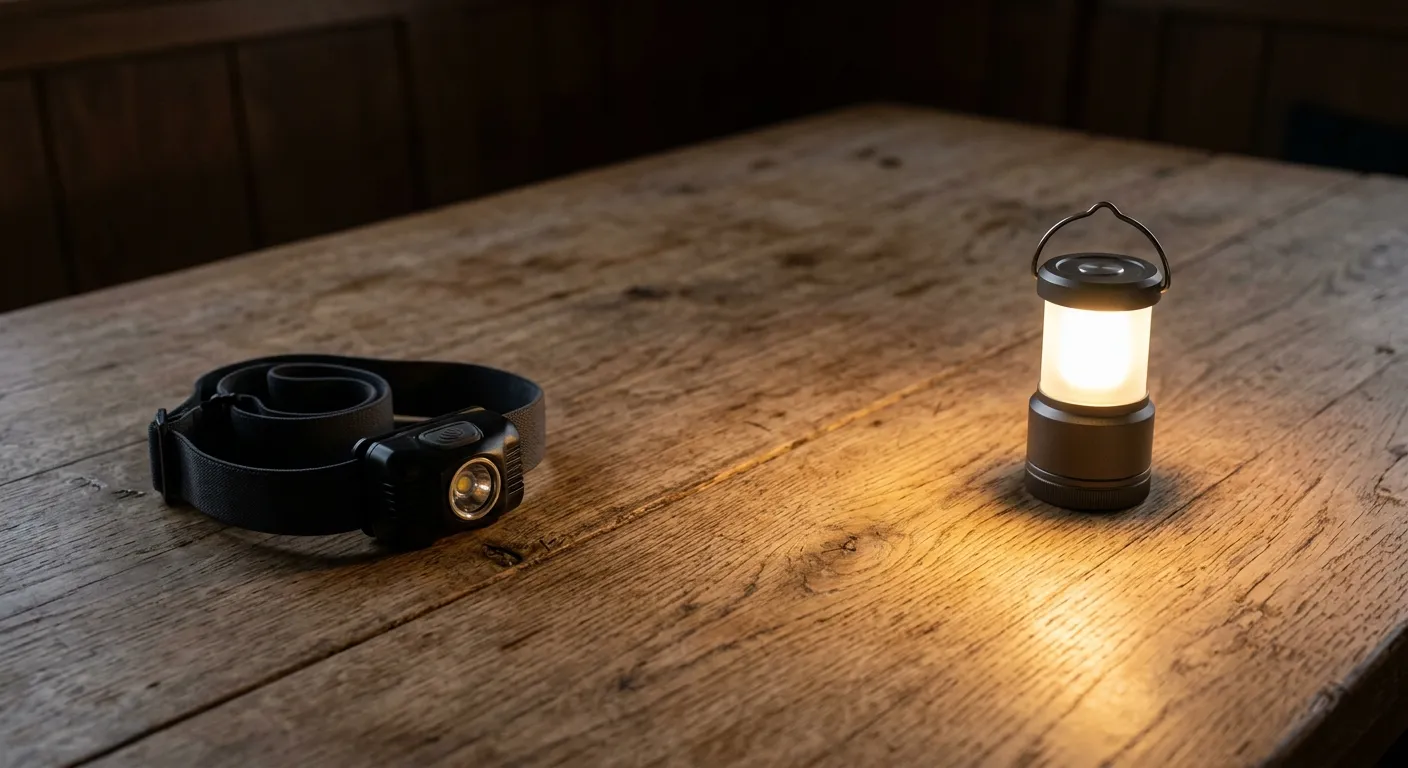
Torches first, candles last
The UK government's Prepare campaign lists a battery or wind-up torch with spare batteries among the basics for a power cut, and says torches are safer than candles. It also points out that using your phone's torch drains the battery you will want for calls. Utah's emergency preparedness site says the same: flashlights are much safer than candles or oil lamps.
That is the ordering to follow. Torches and LED lanterns first. Candles only as a backup, and with care.
What to have
- A torch per person, or at least one per floor. Keep them where you will find them in the dark: by the bed, in the kitchen, near the fuse box or meter, by the front door.
- Head torches for the jobs where you need both hands, such as resetting a trip switch, cooking or carrying things on stairs. Many have a red mode that is easier on night vision.
- An LED lantern that lights a whole room. Battery or solar rechargeable models are both fine. A lantern is more comfortable than several torches for an evening.
- Glow sticks for children's rooms and stairs. They give a dim, safe light for hours, with no flame and no batteries.
- Spare batteries, stored properly. See the batteries guide.
Rechargeable plug-in emergency lights that come on automatically when the power fails are handy for hallways and stairs, but most only last a few hours.
If you must use candles
Candles are a real fire risk. Survipedia's emergency lighting guide, which cites US fire statistics, gives these rules, and they match standard fire-service advice:
- Never leave a lit candle unattended, and blow them out before sleeping.
- Keep flames at least 12 inches (30 cm) away from anything that can burn, such as curtains, paper and wood.
- Use stable holders on a flat, non-combustible surface such as a ceramic plate.
- Keep them out of reach of children and pets.
- Never use candles near sleeping children unless an adult is awake and watching.
Keep candles in a drawer with matches or a lighter, not in a cupboard where you have to search. Tea lights in metal cups are safer than tall, thin candles that can tip over. Fuel-burning lamps such as oil and paraffin lamps also produce carbon monoxide indoors, so they are a poor choice for a closed room.
Spare light bulbs: worth it, but not first
Spare bulbs do not help in a power cut, since there is no power to run them. They are for the ordinary failures that happen at bad times: the stair light or the light over the cooker that goes on the night before a holiday.
Keep a couple of spares for the fittings that matter, in the right type (bayonet or screw, and the right size). LED bulbs are the sensible choice because they last far longer and use much less power, and they also run from small battery or generator setups if you ever have one. Store them in their boxes so they are not broken. Write the bulb type on the box or on a list on the shelf so you buy the right ones again.
Test them every six months
A torch with dead batteries is worse than no torch, because you trust it. Utah's guidance suggests rotating batteries every six months, and Survipedia recommends a yearly drill where you pull out every light and check it works. Pick a date you will remember, put fresh batteries in the ones you are relying on and keep a note. Prepparia can track these as stock items, so batteries and bulbs show up alongside your food when they are due to be checked.
Emergency lighting questions
Is a torch or a candle better in a power cut?
A torch. The UK government's Prepare campaign says torches are safer than candles, and fire safety guidance agrees. Use candles only if you have nothing else, and never leave them unattended.
How many torches do I need?
One per person is a good target, with a head torch or two and a lantern for shared rooms. Put them where you would look for them in the dark.
Should I keep spare light bulbs?
A couple of spares for key lights are handy for everyday failures, but they do nothing in a power cut. Torches and lanterns matter more.
Are wind-up torches any good?
They are useful as a last-resort backup because they need no batteries, but the light is usually dimmer and short-lived. Keep them as a second line, not the first.
Where this comes from
See Be Ready Utah: Light and Power, Survipedia: Shelter lighting and Evaq8's summary of the UK Prepare campaign kit list. Candle safety points follow common fire service advice; check your local fire service for guidance where you live.
Related guides
Be prepared!