How to Label and Track Your Food Stock
A date on every item and a simple record are enough to keep a pantry under control. Here is what to write, where to write it, and how to track stock on paper or in an app.
Why bother labelling
Manufacturers' dates are printed in tiny type, in different places, in different formats. Some tins have them stamped on the base, where you cannot see them on a shelf. Decanted rice and flour has no date at all. If you cannot tell at a glance what is oldest, you cannot rotate.
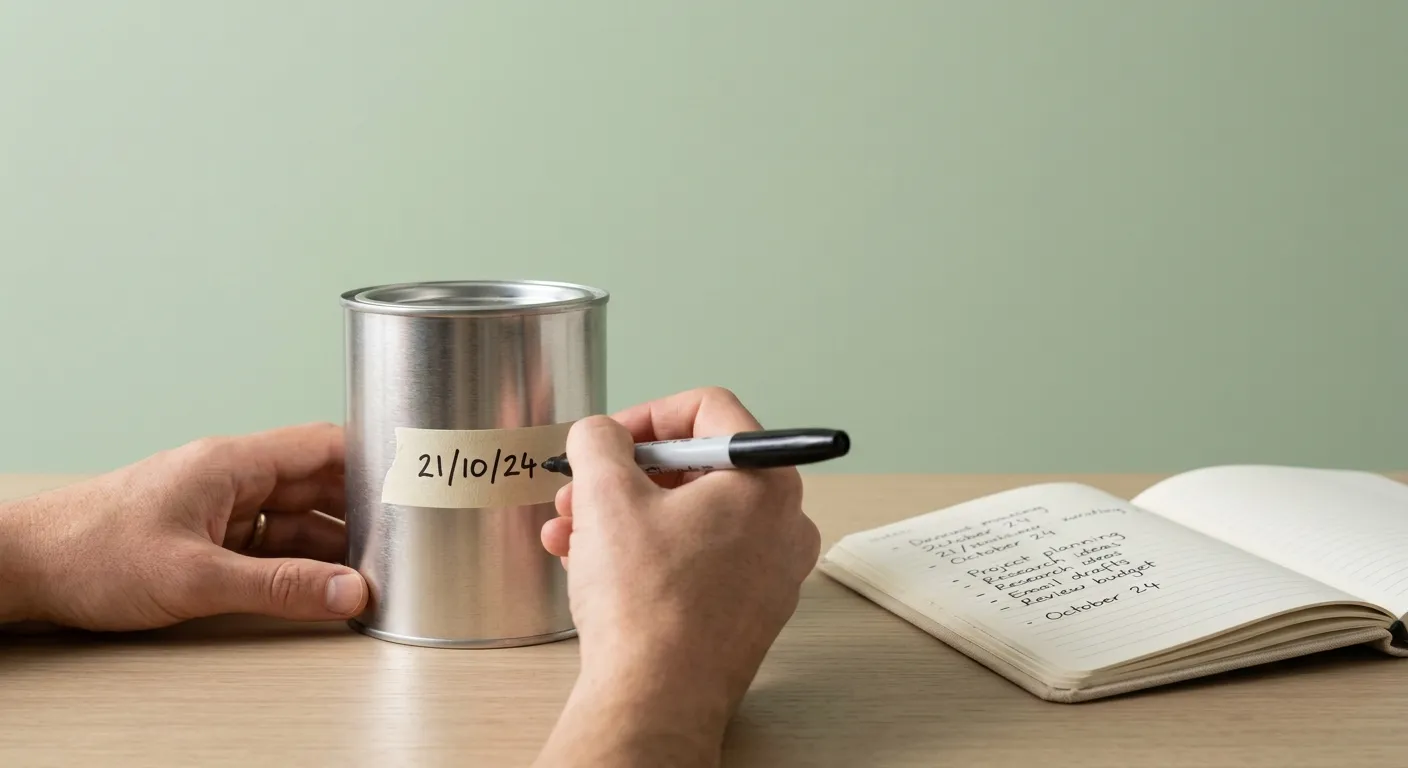
FEMA's advice is to date food with ink or a marker so you can see it easily. It is the cheapest thing you can do for a stockpile and it takes seconds per item.
What to write, and where
Write two things, big enough to read from arm's length:
- The date you would want to use it by. Use the printed best-before if there is one. For things with no date, write the date you bought it and add the shelf life you expect.
- A short code or name, if you keep a list. This links the item to a line in your record.
Put it where you can see it on the shelf: the lid of a tin, the top of a jar, the front of a box. A permanent marker works on most tins. Masking tape or paper labels work on jars and plastic tubs, and you can peel them off later. Write the date in a format you will not misread. Day/month/year and month/year are fine as long as you always use the same one, and writing the month as a word or three letters avoids mix-ups across countries.
On bagged goods, decant into a labelled container and put the date on the container. Keep the original packet or cut out the cooking instructions and allergen list and store them inside.
A simple code system
If you keep more than a few dozen items, a written record helps, and the easiest way to link a label to a record is a short unique code. Two random words such as oak-kelp are easier to read, say and remember than a number, and are hard to mix up.
The label carries the code and the expiry date. The record carries what the item is, how much there is, where it lives and when it was bought. When you use an item you scratch out or tick its code. Prepparia works this way: it makes the codes, prints labels with a QR code, and marks an item used when you scan it. If you prefer paper, a notebook with a page per shelf does the same job.
What a good record includes
| What | Why it helps |
|---|---|
| Item and size | So you know what you have without opening cupboards |
| Quantity | For working out how many days of food you hold |
| Best-before date | So you can sort by what needs using first |
| Where it is stored | For finding it, and for spotting cupboards that run warm |
| Date bought | Useful for items with no printed date |
Keep it short. A record that takes a minute to update will be updated. One that needs twenty fields will be abandoned by March.
Using the record
Sort by date and look at the top of the list once a month. Those are the items to cook this week. Then check the bottom of the list: anything with a very long date can be left alone.
When the record and the shelf disagree, trust the shelf and correct the record. A quick tidy every few months keeps both honest.
If you use an app, make sure it works offline. A power cut is exactly when you will want the list and the network may be down. Prepparia stores your stock on the device so it keeps working without a signal.
Labelling and tracking questions
What is the best way to label canned food?
Write the best-before date on the lid with a permanent marker, large enough to read on the shelf. Many tins have the date stamped on the base, so copying it to the top saves lifting each one.
Do I need an app to track my pantry?
No. A notebook or a spreadsheet works. An app helps mainly by sorting by date and by letting you scan items in and out.
How do I date food that has no expiry date?
Write the date you bought or decanted it, plus the shelf life you expect. Then rotate by that date.
Where this comes from
The advice to mark food with ink and place new stock behind old comes from FEMA: Food and Water in an Emergency. Date and rotation practice also follows USDA FSIS shelf-stable food guidance. The code system described is how Prepparia works.
Related guides
Be prepared!