Where and How to Store Food at Home
Heat, damp, light and pests do more damage to stored food than time does. How to choose the right spot, even in a small flat, and keep the mice out.
The ideal spot: cool, dry and dark
FoodSafety.gov describes the ideal place for canned and dried food as a cool, dry, dark place, with the best temperature between 40 and 70 F (4 to 21 C). The USDA says below 85 F (29 C) is fine for shelf-stable food and warns that anything over 100 F (38 C) is harmful.
In practice: an interior cupboard, a pantry, or a spare-room wardrobe usually beats the kitchen cupboard above the cooker. Keep food away from the cooker, fridge exhaust, radiators and boilers, out of direct sun, and away from anywhere that gets damp.
Places to avoid
- Above or next to the cooker, or under the sink. The USDA specifically says not to put tins there.
- The garage or shed. Temperature swings and damp rust cans, and food absorbs smells from petrol, paint and solvents. FoodSafety.gov advises keeping food away from petroleum products and solvents for that reason.
- The loft. Summer heat can go well above the safe range for stored food.
- Anywhere that floods. FoodSafety.gov suggests shelves that are out of the way of floodwater.
- A damp basement, unless you can keep it dry with shelves off the floor.
Containers and pests
Rodents and insects are the practical threat to dry goods. FoodSafety.gov advises wrapping boxed and paper-packed food heavily or keeping it in waterproof, airtight containers.
What works in a normal house:
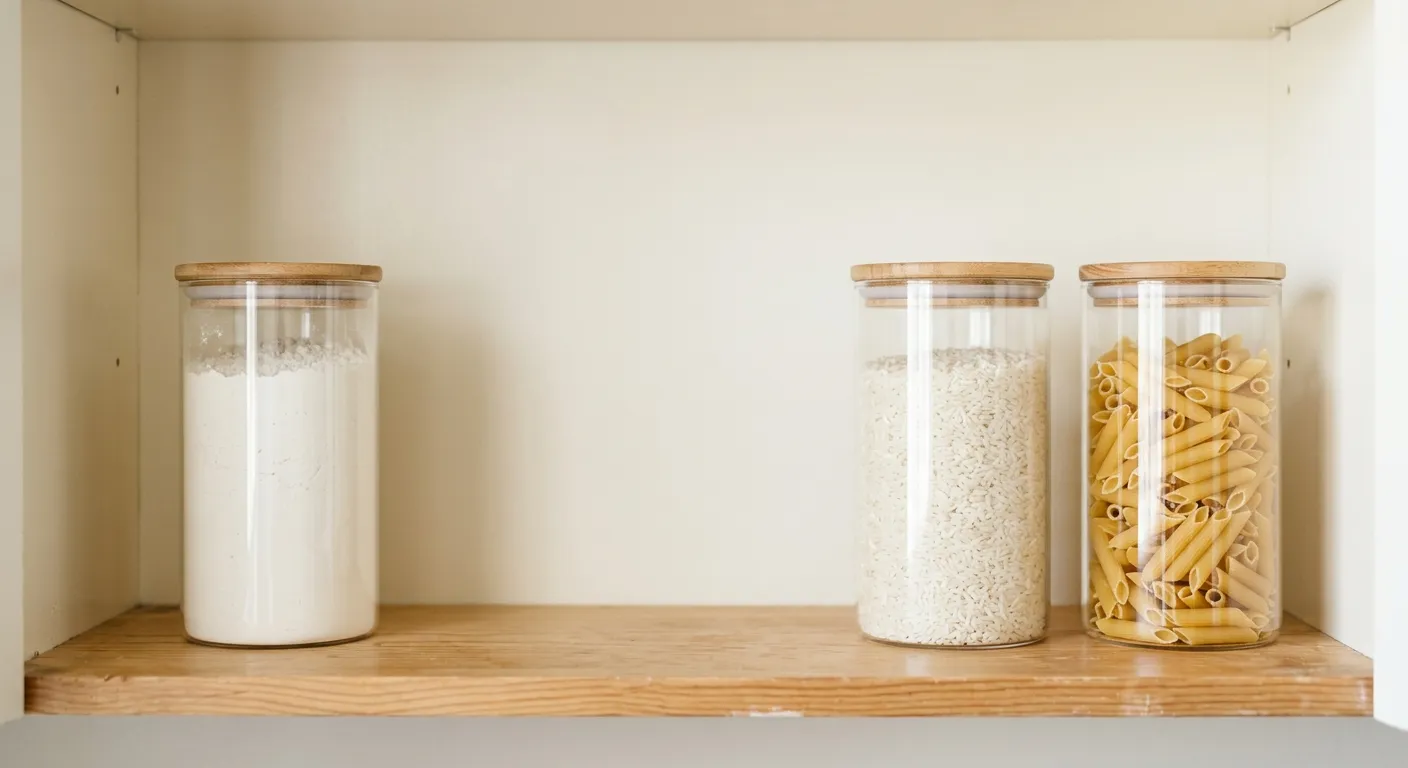
- Move flour, rice, pasta, oats and cereal into airtight tubs or jars with a clip lid. Glass and thick plastic both work. Mice can chew through thin plastic and cardboard.
- Label the tub with the contents and date, and keep the cooking instructions inside.
- Keep tins on shelves or in stacking boxes, not loose on the floor.
- Clean spills at once, and look behind and under storage once in a while.
- If you find weevils or moths in a bag, throw out the affected food, wash the container and shelf, and check the neighbouring packs. Flour and grain are the usual sources.
Small homes and flats
You do not need a pantry. Ideas that work in a small space:
- Use the space under a bed with flat, lidded storage boxes for tins and dry goods. Keep them off any radiator.
- Use the top of wardrobes or the bottom of a coat cupboard.
- Spread it out. Two or three modest stashes in different rooms are easier to fit than one large one, and they protect you if one is lost to a leak.
- Use stacking crates on an interior wall or in a hall cupboard.
- Keep everyday stock at the front and long-term stock behind or below.
Wherever it goes, make sure you can see and reach it. Food that is hard to get to does not get rotated.
Heavy items and water
A full box of tins is heavy, and water weighs about 8 pounds per gallon (roughly 1 kg per litre). Use strong shelves or floor space, keep water on the floor rather than high up, and never overload a shelf. Water storage has its own rules, covered in our water guide.
Food storage questions
Can I store canned food in the garage?
It is better not to. Garages get hot and damp, tins rust, and food can absorb smells from fuel and chemicals. An interior cupboard is a better choice.
How do I keep mice out of stored food?
Keep dry food in airtight containers made of glass or thick plastic, keep tins on shelves, clean spills and check the area regularly.
Is it OK to store food under the bed?
Yes, in lidded boxes, as long as it is not near heat and you can get to it to check dates.
Where this comes from
The temperature ranges and the advice on heat, chemicals and pests come from FoodSafety.gov and the USDA FSIS shelf-stable food page. Water weight is from the Jordan Valley Water Conservancy District.
Related guides
Be prepared!