Hygiene and Sanitation Supplies to Keep at Home
When the water or the drains stop working, clean hands, a working toilet and rubbish that does not pile up matter as much as food. A short, practical list.
Why it matters
Food and water get the attention, but illness spreads fast when hands cannot be washed and waste is not dealt with. A stomach bug in a household with no running water is a much bigger problem than the same bug with a working tap. The supplies are cheap and take up little room.
The basic list
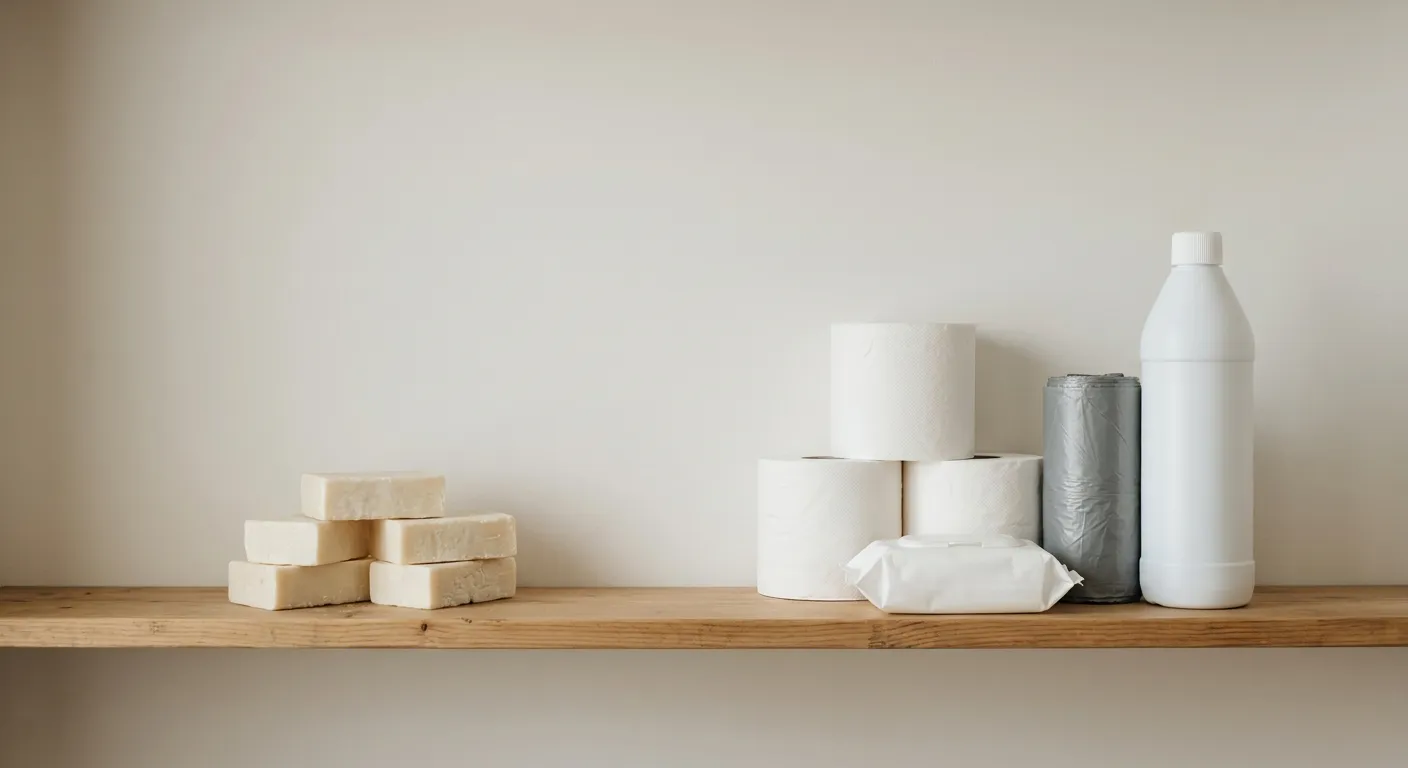
- Soap, several bars or a few bottles of liquid soap.
- Hand sanitiser with at least 60 percent alcohol, as a backup when there is no water. Soap and water is better when you have it.
- Wet wipes for hands, faces and surfaces. Unscented is kinder to skin. Do not flush them.
- Toilet paper, more than you think you need.
- Bin bags, including strong ones and a few small ones for waste and for lining a bucket toilet.
- Unscented household bleach (5 to 9 percent sodium hypochlorite, per the CDC), for cleaning and, if needed, disinfecting water. Keep it in the original bottle, never mix it with other cleaners, and follow the label.
- Sanitary products, nappies, wipes and any incontinence supplies for everyone who needs them.
- Toothbrushes and toothpaste, and a bit of dental floss.
- Disposable gloves, a face mask or two, and a cloth or paper towels.
- A bucket with a tight lid.
- Paper plates, cups and cutlery if water for washing up will be short.
If you use tablets or medicines for an ongoing condition, see our medicines guide. Pet supplies are worth adding to the list too.
If the toilet will not flush
A toilet can be flushed by pouring in a bucket of water, which uses much less than you might think and lets you keep going for a while. Water from a bath or from stored non-drinking sources will do.
If the drains are not working at all, a bucket toilet is the fallback: a sturdy bucket with a lid and a toilet seat if you have one, lined with a strong bin bag. After each use, cover the waste. Tie the bag, double-bag it, and store it somewhere away from the living area and food until you can dispose of it properly. Local authorities give guidance for their area in an emergency, so follow their instructions.
Do not use camping toilet chemicals you have not read the instructions for, and do not mix bleach with anything except water.
Rubbish and cleaning
Keep waste bagged and stored outside, sealed against animals, until collection resumes. Wash your hands after handling anything dirty and before food. Clean kitchen surfaces with soap and water, and disinfect them with a bleach solution if someone in the house has a stomach bug. Follow the bleach bottle for the right dilution, since brands differ.
Hygiene supply questions
What hygiene supplies should I stock?
Soap, hand sanitiser, wet wipes, toilet paper, bin bags, unscented bleach, sanitary products and dental supplies, plus a bucket with a lid.
Is hand sanitiser as good as soap and water?
Soap and water is better when you have it. Sanitiser with at least 60 percent alcohol is a useful backup when you do not.
Can I flush a toilet without running water?
Yes. Pouring in a bucket of water into the bowl works for a while. If the drains are out, use a lidded bucket lined with a bin bag and follow local guidance for disposal.
How do I use bleach for cleaning?
Use unscented household bleach and follow the dilution on the label. Never mix it with other cleaners, especially ammonia or acids.
Where this comes from
The bleach specification is from the CDC guidance on emergency water. Other items reflect common emergency-planning lists, including Ready.gov. Your local council or health authority will give specific guidance for waste and sanitation in your area. The 60 percent alcohol figure for sanitiser is the standard public health recommendation.
Related guides
Be prepared!