What Goes in a Home First Aid Kit
A practical list of what to keep in a home first aid kit, how to check it, and where to keep one at home and in the car.
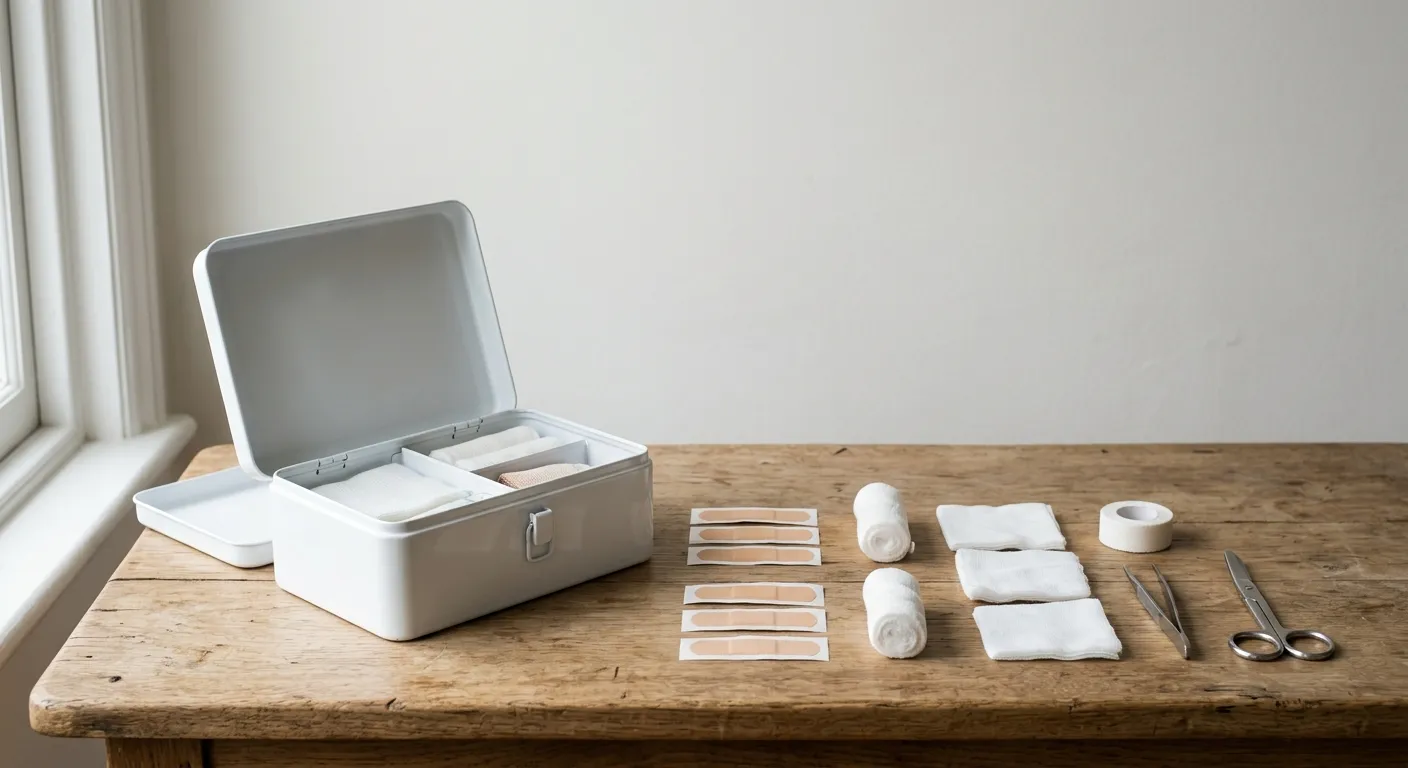
Buy one or build one
Both work. The Red Cross says you can buy a kit or put one together, and a ready-made box from a pharmacy is a fine start. Building your own means you can choose better dressings and add what your household actually needs. Either way, take an hour to open it and see what is in it and how to use it.
A first aid kit is not a substitute for training. A short first aid course is one of the most useful things you can do, and it teaches you what the contents are for.
What to include
For a family of four, the American Red Cross list includes:
- first aid instructions,
- assorted adhesive bandages (plasters), about 25,
- sterile gauze pads in a couple of sizes, and two larger absorbent dressings,
- a roller bandage or two, and two triangular bandages,
- adhesive cloth tape,
- antiseptic wipes and antibiotic ointment packets,
- non-latex gloves, two pairs,
- tweezers,
- a non-glass, non-mercury oral thermometer,
- an instant cold compress,
- a breathing barrier with a one-way valve for CPR,
- an emergency (foil) blanket,
- hydrocortisone ointment packets.
NHS trust guidance for home use adds a few things to consider: medical tape, sterile dressings, eye wash solution, a thermometer, tweezers for splinters, and plasters in a range of sizes, waterproof if possible. Add blunt-ended scissors and a few safety pins.
The Red Cross list also includes low-dose aspirin, but medicines are a personal decision. Talk to a pharmacist or doctor about what suits your household. Our medicines guide has more.
Check it, and keep it where you can find it
The Red Cross tells you to check the kit regularly, replace used items and throw out anything out of date. Sterile items such as dressings and eye wash carry expiry dates. NHS guidance on workplace first aid boxes notes that many sterile items are marked with dates that should be followed, and that for non-sterile items without dates it is a matter of judgement whether they are still fit for purpose.
A routine that works: check the kit twice a year along with your food and batteries, and after any use. Track the kit as a stock item, with the earliest expiry date, so it shows up in your list.
Keep a kit in the kitchen or hall, one in the car, and a small one in any bag you take travelling. Everyone in the house should know where they are. Keep them out of reach of small children and keep any medicines in a separate, locked place.
Things people forget
- A list of emergency phone numbers and allergies, written on paper.
- Any personal items such as an inhaler or adrenaline auto-injector, following your doctor's advice.
- A torch, because emergencies happen in the dark.
- A whistle or a way to attract attention.
- Spare glasses or contact lenses if you need them.
- Children's and pet-specific supplies, in consultation with a paediatrician or vet.
First aid kit questions
What are the essentials for a home first aid kit?
Plasters, sterile gauze and dressings, bandages, medical tape, antiseptic wipes, gloves, tweezers, scissors, a thermometer and a foil blanket. Those cover most minor injuries.
How often should I check my first aid kit?
At least twice a year and after using it. Replace anything used or out of date. The Red Cross advises regular checks.
Do first aid kit items expire?
Yes. Sterile items, eye wash and ointments carry dates. Check them and replace anything out of date.
Should I keep medicines in the first aid kit?
Keep them separately, in original packaging, out of children's reach. Ask a pharmacist what is appropriate for your household.
Where this comes from
The contents list follows the American Red Cross first aid kit guidance, with extra items from NHS self-care guidance and NHS first aid box information. This is general information, not medical advice. For anything specific to your household's health, ask a pharmacist, doctor or qualified first aid trainer.
Related guides
Be prepared!