FIFO Rotation System: How Food Should Be Rotated in Storage
First in, first out means the oldest food is used first. How FEMA describes it for a home pantry, how restaurants date-mark for seven days, and a routine that actually gets kept.
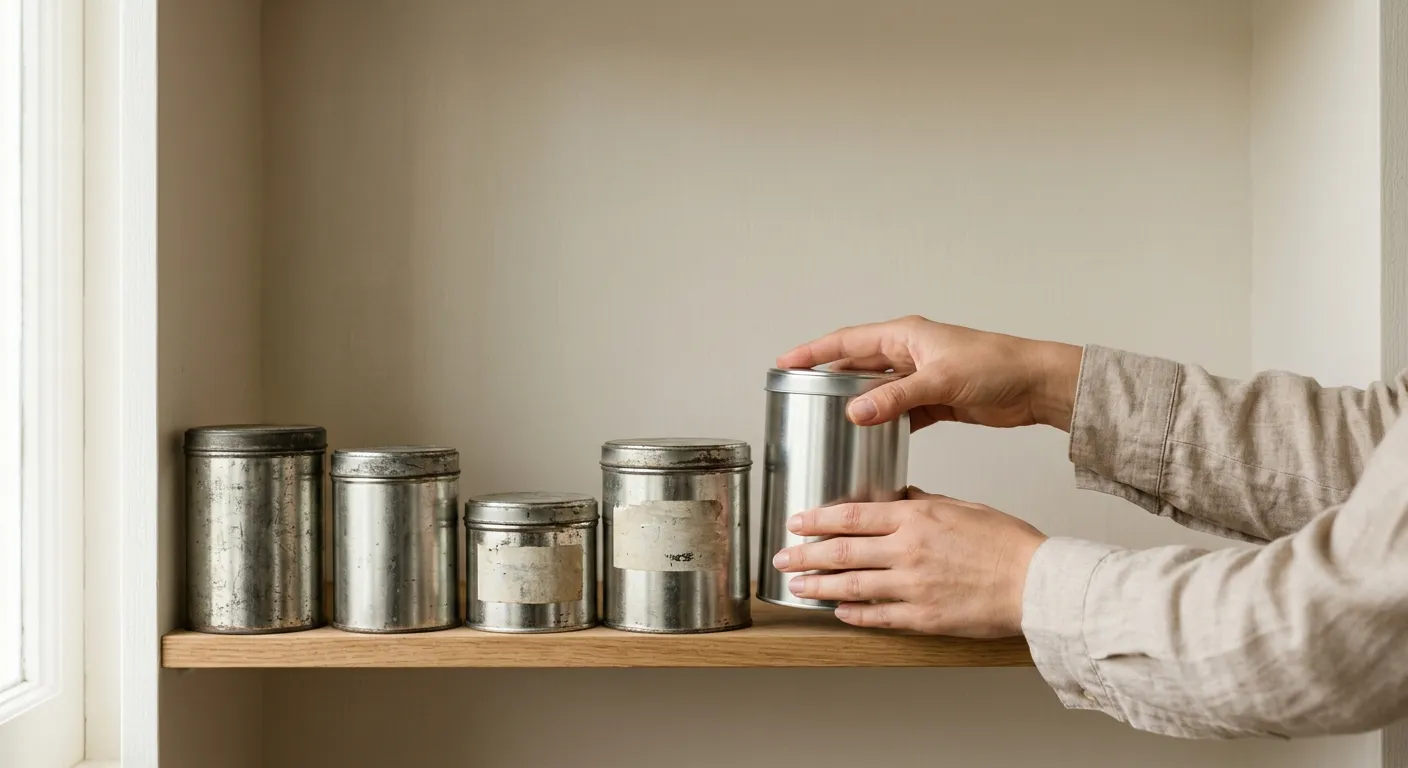
What FIFO means
FIFO is first in, first out. The oldest pack is the one you open. New shopping goes behind it. FEMA puts the whole method in one paragraph in Food and Water in an Emergency: date the food with ink or marker, place new items at the back of the storage area and older ones in front, use foods before they go bad, and replace them.
Clemson University's canned-goods sheet uses the same words: first in, first out, newly bought cans behind the same products already on the shelf.
That is the system. It fails when dates are unreadable, when a deep cupboard hides the back row, or when you buy a case of something you do not actually eat. The rest is furniture and habit.
Home pantry versus a restaurant fridge
People meet FIFO in two different worlds. Do not mix up the clocks.
Dry emergency food at home. USDA FSIS quality windows for unopened commercial tins, cool and dry:
- high-acid (fruit, tomatoes, juice): 12 to 18 months
- low-acid (meat, most vegetables, beans, pasta products): 2 to 5 years
- home-canned: about 1 year
USDA also says to check the pantry every few weeks and use cans that have been there a while. Michigan State University Extension suggests rotating an emergency supply about every six months. Utah State University's food-storage booklet says change stored food and water every 6 to 12 months and follow use-by dates.
Ready-to-eat fridge food in a food business. FDA Food Code section 3-501.17 is a different rule: refrigerated ready-to-eat time/temperature control for safety (TCS) food held above 24 hours must be date-marked and used or discarded within 7 days at 41 F (5 C) or below, counting the prep day or the day a commercial pack is opened as day 1. That 7-day mark exists to limit Listeria monocytogenes. It does not apply to a sealed tin of beans in a cupboard.
At home you can still steal the restaurant habit for leftovers: write the opened date on the container and eat fridge leftovers within a few days. Do not put a 7-day sticker on unopened canned fruit and think you have followed FEMA.
How to set the shelf so FIFO happens
- Group like with like. All tinned tomatoes in one row. Mixed shelves hide old stock.
- Earliest date at the front. If two tins are months apart, they should not be shuffled.
- Keep rows shallow. Two tins deep is easy. A mystery back row is where food dies. A riser, a can dispenser or a plastic bin turns a deep cupboard into a queue.
- Write a date people can read. Copy the code from the base onto the lid. FEMA's instruction is ink or marker, not a mental note.
- Off the floor. Catering guidance commonly uses 6 inches (15 cm) off the floor so you can clean and see pests. It is a good home habit too.
- Cool and dry. Clemson: 50 to 70 F (10 to 21 C) for canned food; time drops above 75 F (24 C). Heat shortens dates faster than sloppy stacking does.
When you shop, new packs go behind. When you cook, take from the front. Every month or two, pull anything within a couple of months of its date into the next week's meals. Twice a year, empty the emergency shelf, bin bulging or rusty tins, and restock from what you actually eat.
What to do with food near its date
Cook it. If you cannot, give unopened tins away while they still have months left. Food banks want usable stock, not last week's panic.
A best-before or best if used by date on a shelf-stable tin is a quality date. USDA: the food can still be used after that date if the container is sound and storage was sane. A use-by date on perishable food is a safety date. Follow it.
Throw out cans that are swollen, leaking, badly rusted or deeply dented on a seam, dated or not. Never taste to check.
The usual ways FIFO breaks: buying a whole case so everything expires together; hiding a second stash in the loft; having no list. Stagger purchases, keep food where you cook, and log dates. A stockpile you cannot see is not a system.
FIFO questions
What is a FIFO rotation system?
First in, first out. You use the oldest food first and put new stock behind it. FEMA's home version is: date the pack, new items at the back, older ones in front.
How should food be rotated in storage at home?
Shelve each type in date order, take from the front, and glance along the shelf every few weeks. Do a full emergency-supply check about every six months. Store tins cool and dry so the dates mean something.
Is the restaurant 7-day FIFO rule the same as pantry rotation?
No. FDA Food Code 7-day date marking is for refrigerated ready-to-eat TCS food held at 41 F or below. Sealed canned food in a cupboard follows USDA quality windows of months to years, not seven days.
How often should I rotate emergency food?
USDA: check the pantry every few weeks. Extension services commonly say every six months for the emergency shelf, or 6 to 12 months for a stored supply. If you eat what you store, you are rotating every week.
Where this comes from
Home FIFO wording: FEMA, Food and Water in an Emergency and Clemson HGIC, Safe handling of canned goods. Tin lives and pantry checks: USDA FSIS, Shelf-Stable Food Safety. Six-month emergency rotation: Michigan State University Extension. 6 to 12 months: USU food storage booklet. Seven-day fridge date marking: FDA Food Code 3-501.17 (ready-to-eat TCS food at 41 F).
Related guides
Be prepared!