Batteries for Emergencies: What to Buy and How to Store Them
Alkaline, lithium or rechargeable? How long each lasts on the shelf, why batteries should not be left in devices, and how to keep a useful spare stock.
Which battery type
Alkaline (the ordinary supermarket type) are cheap and easy to find. They usually carry a shelf life of about 5 to 10 years from the manufacturing date, printed on the pack. One manufacturer's technical letter for alkaline packs quotes around seven years in cool, dry storage, with heat and humidity shortening it. They are the default for torches, radios and clocks.
Lithium (non-rechargeable) AA and AAA cells are more expensive, lighter and work better in the cold. One brand's product page rates them from -40 to 60 C and states a shelf life of 10 years, against -20 to 54 C for the alkaline equivalent. They are good for the emergency torch you rarely use, and for anything left outside or in a car in winter.
Rechargeable NiMH cells save money if you use batteries often. Choose low self-discharge types, which Survipedia says keep around 70 to 80 percent of their charge after a year. Ordinary NiMH cells drain to nearly empty over six to twelve months, so they are a poor choice for an emergency torch you do not check.
A sensible mix: lithium in the emergency torch and smoke alarm-type devices you do not touch, alkaline spares in the drawer, and low self-discharge rechargeables for everyday use.
How to store them
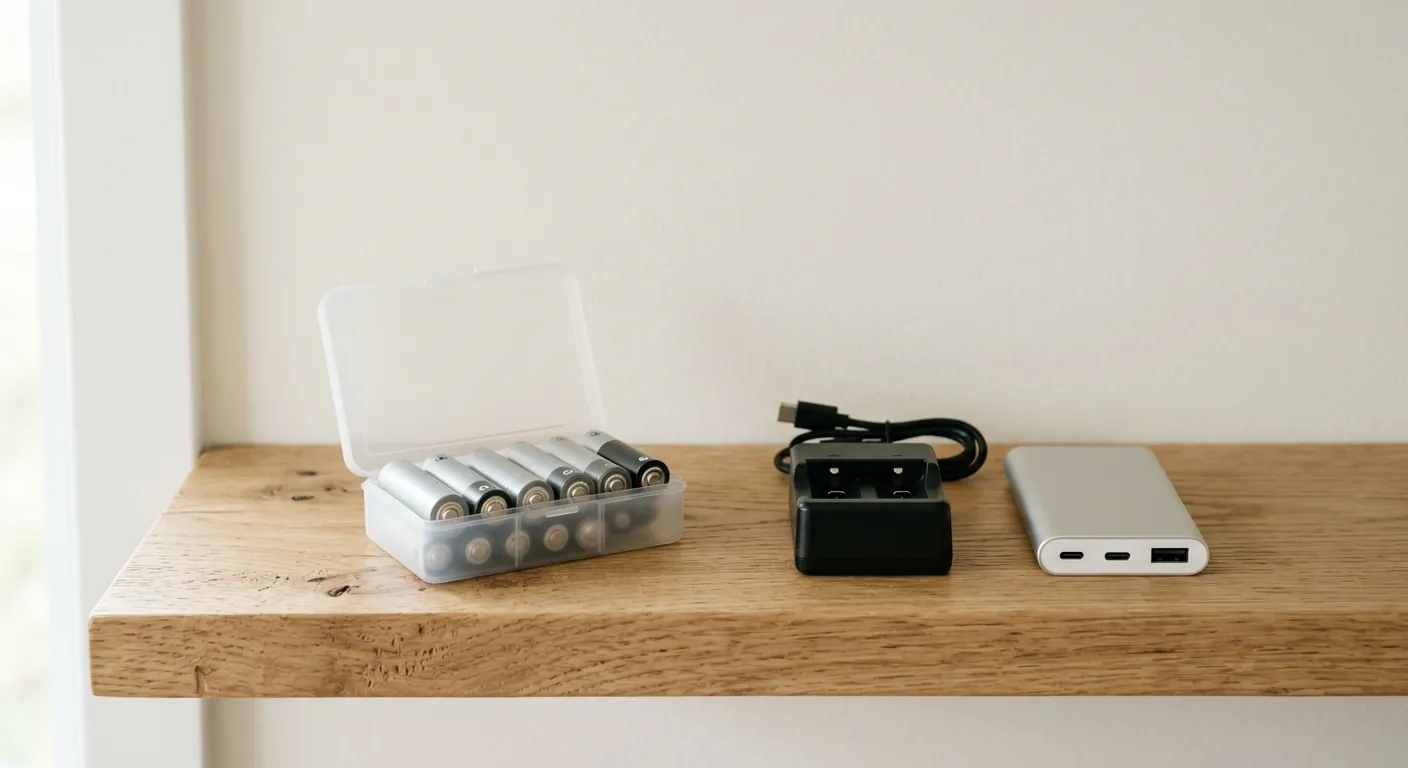
- Keep them in the original packaging or a plastic battery case, so terminals cannot touch each other or metal objects.
- Cool and dry. A drawer in an interior room is better than a hot loft or a car glovebox.
- Do not keep them loose in a drawer with keys and coins.
- Do not mix old and new, or different types, in the same device.
- Store spares separately from the devices. Be Ready Utah advises keeping batteries in their packaging and not inside flashlights or radios, because they can leak and corrode the device. Survipedia describes alkalines corroding inside devices left in a hot garage.
- Do not put them in the fridge or freezer. It is an old habit, but modern batteries gain little from it, and condensation is a risk.
What sizes to stock
Check each device you rely on and write down its battery type. Common ones are AA and AAA for torches and radios, D or C for larger lanterns, 9V for some smoke alarms, and coin cells (CR2032) for small gadgets and car key fobs. Keep at least one full spare set for each essential device.
A power bank for your phone is worth having for power cuts. Charge it, and top it up every few months, since lithium power banks slowly self-discharge. A small AA-powered USB charger is a useful backup when the bank is flat, and it lets your spare AAs do double duty.
A simple check routine
Every six months:
- Look at the date on your spare packs and use up the oldest ones in everyday devices, replacing them with fresh stock.
- Open each emergency torch, radio and lantern. Check for white crust or leaks on the contacts. Clean minor corrosion with a cotton bud dipped in vinegar or lemon juice, and let it dry.
- Test each device and fit fresh batteries in the ones you are relying on.
- Recharge power banks and any rechargeable lights.
The six-month gap is the same one Be Ready Utah suggests for rotating flashlight batteries. Write the manufacturing or expiry date on any pack with a hard-to-read one, and use the oldest first, exactly as you would with food.
Battery questions
How long do batteries last in storage?
Alkaline batteries usually have a printed shelf life of around 5 to 10 years, and lithium AAs are commonly rated at up to 10 years. Heat and damp shorten it, and the date on the pack is the one to follow.
Should I leave batteries in my emergency torch?
Better not, for alkaline types, which can leak over time. Lithium batteries are less prone to leaking, so many people leave them in. Whichever you use, test the torch every six months.
Are rechargeable batteries good for emergencies?
Only low self-discharge types, and only if you keep them charged. They are good for daily use. For a torch that sits in a drawer, lithium or alkaline is more reliable.
Is it safe to store batteries in the fridge?
There is little benefit with modern batteries, and condensation can cause damage. A cool, dry room is enough.
Where this comes from
See Be Ready Utah: Light and Power, Survipedia: Shelter lighting and Evaq8's power cut kit list for lithium and alkaline ratings, plus a manufacturer's technical letter on alkaline shelf life. Figures vary by brand, so always read the pack.
Related guides
Be prepared!